Alcohol vs Alcohol-Free Mouthwash: How to Choose
Alcohol-free mouthwash may feel more comfortable if your mouth is dry or a rinse stings. When comparing alcohol vs alcohol-free mouthwash, check the…
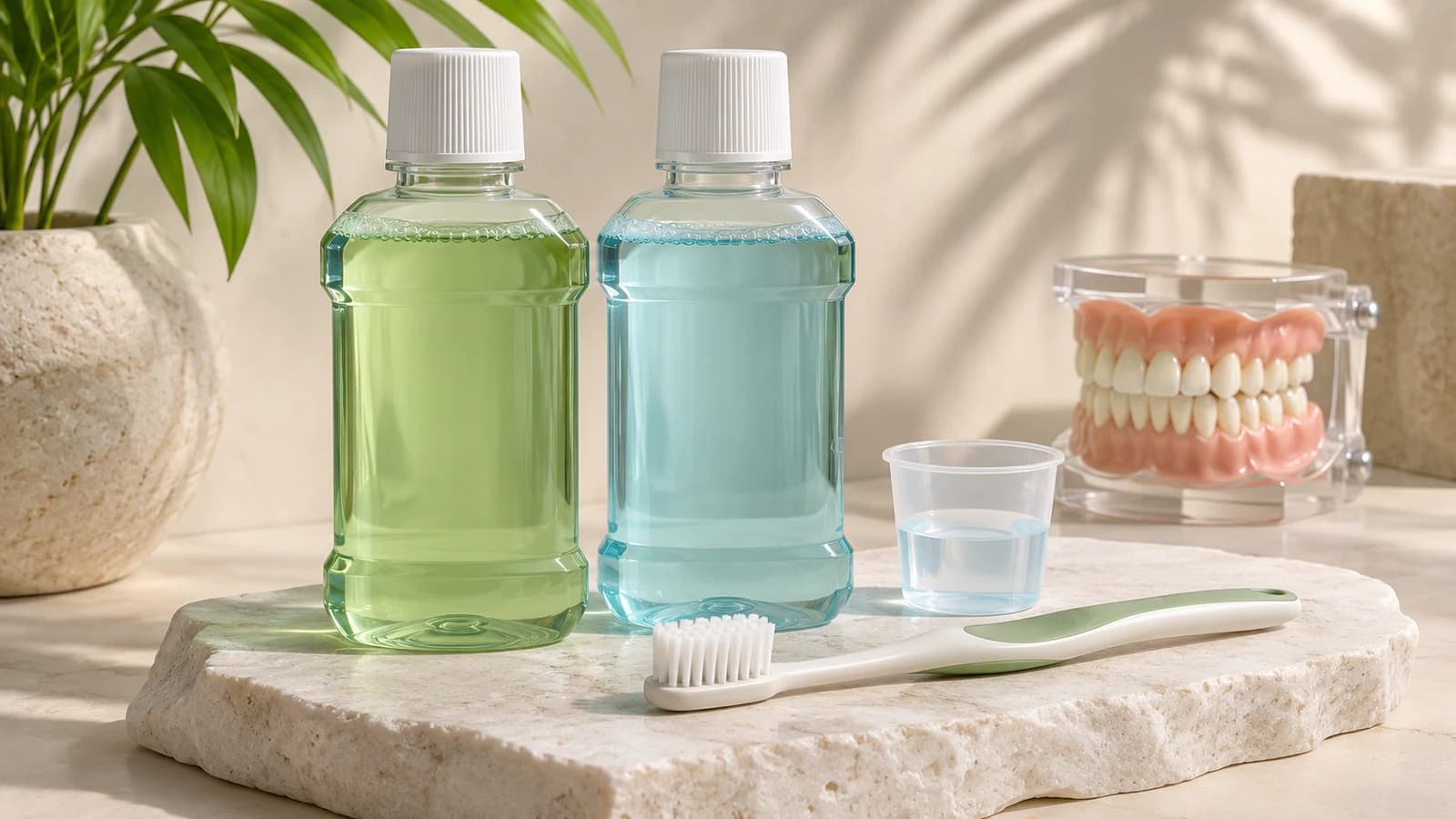
Active ingredient and what the product is intended to do. An alcohol-free label alone does not tell you whether a rinse protects against decay or has another therapeutic purpose.
Some people can skip mouthwash altogether. If you want to add one, start with the reason you are buying it, such as extra fluoride protection, a prescribed short course or simple breath freshening.
What Alcohol and Active Ingredients Do in Mouthwash
Alcohol can be included as part of a formulation, including helping dissolve certain ingredients. Its presence does not independently establish how well the complete product addresses plaque, gingivitis, or decay risk.
Two rinses with different flavours may have different active ingredients and intended benefits. Comparing only the strength of the taste or the words alcohol-free can overlook the most useful information on the label.
If a product causes burning, irritation, or increased dryness, do not keep using it simply to finish the bottle. Stop the product that is causing discomfort and discuss an alternative. Persistent dry mouth also deserves assessment rather than repeated attempts to mask it with a fresh taste.
A cosmetic rinse mainly provides a pleasant taste or temporarily masks odour. A therapeutic rinse contains active ingredients intended for a particular benefit, such as fluoride for additional decay prevention or an antimicrobial ingredient for suitable gum-care needs.
Fresh breath immediately after rinsing does not prove that the underlying cause has been treated. A cavity, hardened deposits, or gum disease may still need dental care.
Not every mouthwash is intended for indefinite daily use. Some are optional additions to a routine, while others are prescribed or recommended for a specific clinical reason and period.
|
What You Want From a Rinse |
What to Check |
|---|---|
|
Extra fluoride protection |
Look for fluoride as an active ingredient and ask whether you need it. |
|
A more comfortable rinse |
Consider an alcohol-free product if alcohol feels drying or irritating. |
|
A prescribed treatment |
Follow the dentist’s product and duration instructions. |
|
Short-term breath freshening |
A cosmetic rinse may freshen breath temporarily. |
When Alcohol-Free Mouthwash May Suit You
An alcohol-free option may be more comfortable for people with dryness, easily irritated tissues, or stinging with a particular formulation. Check the other ingredients too: alcohol-free does not mean that no ingredient could ever irritate your mouth.
If a dentist recommends a product after treatment or for a particular oral condition, follow those instructions. Do not assume another rinse has the same function simply because its flavour or packaging is similar.
Children need to be able to rinse and spit reliably, and the age guidance on the label matters. Mouthwash is generally not recommended for children under six unless a dentist gives specific instructions. Keep it out of reach and do not allow it to be swallowed.
If you changed mouthwash because of a burning feeling, note whether the discomfort occurs only while rinsing or continues afterwards. Stop using a product that irritates you. If dryness, soreness or a bad taste continues when you are not using the rinse, ask about the underlying cause rather than switching flavours again.
Check the Active Ingredient for Your Goal
Fluoride for Additional Decay Prevention
A fluoride rinse can be useful in selected circumstances, but it is not automatically necessary for everyone who uses fluoride toothpaste. A dentist can assess the benefit and advise how to add it without making the routine unnecessarily complicated.
Timing matters. Rinsing immediately after brushing can wash away fluoride left by the toothpaste. A separate time of day is often more suitable when an additional fluoride rinse has been recommended.
Antimicrobial Ingredients for Appropriate Gum-Care Needs
Some formulations help control plaque or gingivitis alongside brushing and interdental cleaning. Nevertheless, recurring swollen or bleeding gums need assessment rather than repeated self-treatment with a stronger rinse.
Chlorhexidine is not simply a breath freshener for unrestricted long-term use. Follow professional instructions because it can cause effects such as staining and altered taste. Do not extend a course yourself when symptoms persist.
How to Use Mouthwash With Brushing
Read the intended purpose, age limit, amount, and rinsing time on the label or prescription.
Measure the recommended amount instead of assuming that a larger dose works faster.
Do not dilute it unless the instructions specifically tell you to do so.
Rinse for the advised time, then spit it out without swallowing.
Follow the guidance about eating, drinking, and timing in relation to brushing.
Different products can have different instructions. Avoid carrying the routine from one bottle to another without checking, particularly when switching between an everyday rinse and a product recommended after a procedure.
If the label and the instructions you received appear inconsistent, contact the clinician or pharmacist for clarification before changing the regimen yourself.
No. It does not replace physically cleaning the tooth surfaces and spaces between teeth. A liquid does not automatically remove all the plaque attached to those surfaces.
If you are using mouthwash because you cannot comfortably clean an area, explain that difficulty. A preventive dental examination can identify deposits, technique problems, and whether a different cleaner or an additional product is appropriate.
A problem that returns a few hours after rinsing may have an untreated cause. Buying a stronger flavour can delay recognising the issue rather than solve it.
If your dentist suggests a fluoride rinse, keep it somewhere you will remember it at a separate time from brushing. If the rinse was prescribed after a procedure, use the instructions from the treating clinic. A product recommended for a specific problem may have a set course or different timing from a daily cosmetic rinse.
Choose a Rinse for a Clear Purpose
Bring the bottle or a photo of its active ingredients to your check-up if you are unsure whether it suits your routine. FLOSS Dental Studio is in Kerobokan, Kuta Utara. See Dentist Bali for clinic details and use the Dentist Kuta or Dentist Canggu guide to plan your visit.