Fluoride Toothpaste: How to Choose the Right Strength
Choose fluoride toothpaste by reading the fluoride concentration and the age instructions on the label. Australian guidance recommends standard…
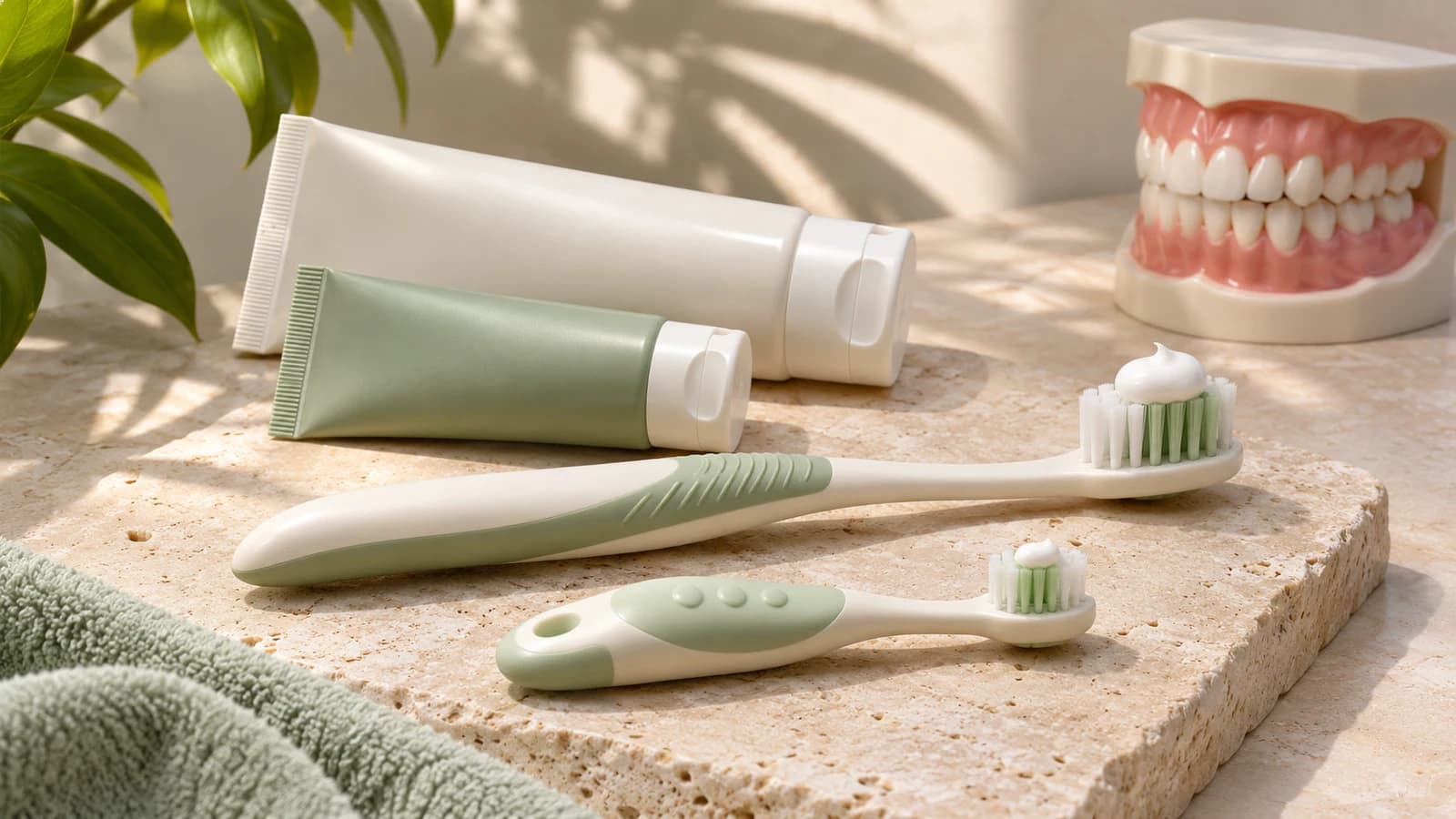
Fluoride toothpaste from age six and a lower-strength paste for younger children from 18 months, unless their dental professional advises a different plan.
The number on the tube is useful only if you also know who will use it and how much they need. The examples below follow Australian guidance. Advice in other countries can differ, and a dentist may adapt it for someone with a higher risk of tooth decay.
How Fluoride Helps Protect Teeth
Fluoride helps tooth surfaces resist acid damage and supports the replacement of minerals during early decay. It works as part of a routine that includes effective cleaning and limiting how frequently teeth are exposed to sugary food and drinks.
Early mineral loss is different from an established cavity with missing tooth structure. Toothpaste cannot rebuild a large hole or replace a filling that is clinically needed. Understanding the stages of tooth decay helps explain why a single product cannot solve every dental problem.
A strong mint flavour or a large amount of foam does not measure protection against decay. A mild-tasting product can still contain an appropriate fluoride concentration.
Think of the label as a guide to prevention. The fluoride in toothpaste helps protect the surface that is still there. A hole you can feel, pain when biting or food that keeps collecting in the same spot calls for an examination. Switching toothpaste cannot tell you what is causing those symptoms.
There is also a difference between what a product is for and what it feels like to use. A low-foam paste may be easier for someone who dislikes foam. A mild flavour can make it easier for a child to tolerate brushing. Once you know the right fluoride strength, pick a flavour and texture that will make the routine easier to repeat.
How to Read the Fluoride Concentration
Find the ppm Figure
Ppm means parts per million and expresses concentration. Figures such as 1,000 ppm and 1,450 ppm make it easier to compare the fluoride content of different products.
Look for the fluoride information rather than comparing percentages of differently named ingredients. If the packaging lists information you cannot interpret, ask a dentist or pharmacist rather than assuming that two percentages mean the same thing.
Separate Additional Claims from the Basic Function
Toothpaste marketed for sensitivity, whitening, or gum health may contain other active ingredients. Those claims do not automatically establish that the fluoride level is appropriate or that the product treats the cause of your symptoms.
Likewise, a fluoride-free product does not provide the same fluoride protection simply because it is described as natural. Choose according to the function you need and the instructions for the product.
Read the Age and Use Instructions
Check the recommended amount and any supervision instructions. Children’s products do not all have the same formulation. A high-fluoride prescription product should not be treated as an ordinary family toothpaste.
If you are comparing tubes in a pharmacy, turn them over and find the active ingredient and the strength statement. You may see a number followed by ppm fluoride, or a listing in milligrams of fluoride per gram. A product can name a fluoride compound without showing an easy-to-compare fluoride figure on the front. Ask the pharmacist or dentist if the label is unclear.
When you are choosing between a sensitivity paste and a standard paste, read the fluoride line on each. Then ask what symptom you are trying to manage. Sensitivity can have more than one cause, so a product marketed for sensitive teeth may be part of the plan while the cause is investigated.
Choosing Fluoride Toothpaste for Children and Adults
|
Age in Australian Guidance |
Usual Choice |
How to Use |
|---|---|---|
|
First tooth to under 18 months |
Water and a small soft brush |
Ask a dentist if your child needs fluoride earlier. |
|
18 months to under six |
Children’s paste, about 500–550 ppm fluoride |
Use a small pea-sized amount with adult help. |
|
Six years and older |
Standard paste, 1,000–1,500 ppm fluoride |
Continue supervision as needed. |
From the first tooth until 18 months, Australian guidance generally recommends cleaning with a small, soft brush and water. If a child has a higher risk of decay, ask a dental professional whether fluoride toothpaste should start earlier. Parents should keep brushing the child’s teeth as they learn the movements.
From 18 months to under six years, choose a children’s toothpaste with around 500–550 ppm fluoride. An adult should put a small pea-sized amount on a soft child-sized brush and supervise brushing. Encourage the child to spit out the excess as soon as they can.
From six years, Australian guidance recommends standard toothpaste containing 1,000–1,500 ppm fluoride. Keep helping a child who still misses the back or inside surfaces. If you are buying toothpaste while travelling, read the concentration as well as the age label because products and labelling can differ across countries.
If you have children at different stages, keep the tubes separate and place the adult’s or prescription paste out of reach. A dentist can explain which product goes with each brush if a child’s care plan differs from the age-based advice.
How Much Toothpaste to Use
For a young child, put the toothpaste on the brush yourself. A small pea-sized amount of the lower-strength toothpaste is sufficient under the Australian guidance for children aged 18 months to under six. Supervise brushing and keep the tube out of reach when you are finished.
If your child swallows toothpaste because the flavour is appealing, try a milder suitable product and keep dispensing the amount yourself. If a child has swallowed a large amount, seek advice promptly from a poisons service or healthcare professional using the product and amount to explain what happened.
For someone who has difficulty spitting for a medical or developmental reason, ask a dental professional to demonstrate a suitable routine. Bring the toothpaste and toothbrush along so they can advise you on the products you already use.
Make Fluoride Part of Your Brushing Routine
Choose an appropriately sized, soft-bristled brush and apply the recommended quantity of toothpaste.
Brush gently over all surfaces twice daily, including last thing before bed.
Help or supervise children so back teeth, inner surfaces, and the gumline are not consistently missed.
Spit out the excess afterwards. Avoid immediately rinsing with a large amount of water, which washes away fluoride left on the teeth.
Clean the brush and put the toothpaste away safely.
Toothpaste does not replace suitable interdental cleaning or attention to frequent sugar exposure. It is a useful protective measure, rather than permission to overlook other parts of prevention.
At bedtime, build brushing into the same sequence as putting on pyjamas or setting an alarm. Keeping a consistent order can be more useful than buying another product when the main difficulty is remembering to brush. On holiday, pack a tube you already tolerate so a change of flavour or foam does not disrupt the routine.
Use the same tube for long enough to see whether it fits your routine. A product that you consistently skip because of its taste or texture can make brushing harder to keep up.
When to Get Advice About Higher-Fluoride Products
Arrange an assessment if a child repeatedly develops cavities, a patch on a tooth changes, or there is dental pain. Adults with dry mouth or recurrent decay may also need a more specific plan.
During a preventive dental examination, the dentist can assess decay risk, brushing technique, and whether additional fluoride is appropriate. Prescription toothpaste, mouthwash, and professional applications have different concentrations and instructions.
Avoid using a stronger product simply because the usual one has not resolved pain. A painful tooth may have a problem that needs treatment rather than a different fluoride concentration.
Ask for individual advice if you repeatedly develop cavities, have ongoing dry mouth or have exposed root surfaces. Bring the tube or a photo of the label, plus any prescribed rinse or toothpaste. A dentist can see which products you already use, identify where decay is occurring and tell you whether a prescription-strength product is suitable.
Choose Toothpaste for the Person Using It
Bring a photo of the label to your next check-up if you are unsure which tube fits your household. FLOSS Dental Studio is in Kerobokan, Kuta Utara. See Dentist Bali for clinic details and use the Dentist Kuta or Dentist Canggu guide to plan your visit.