Dental Tartar: Causes, Risks, and How to Remove It
Dental tartar is a common oral health problem that often goes unnoticed. At first, it may appear only as a yellow or brownish layer. If it continues to…
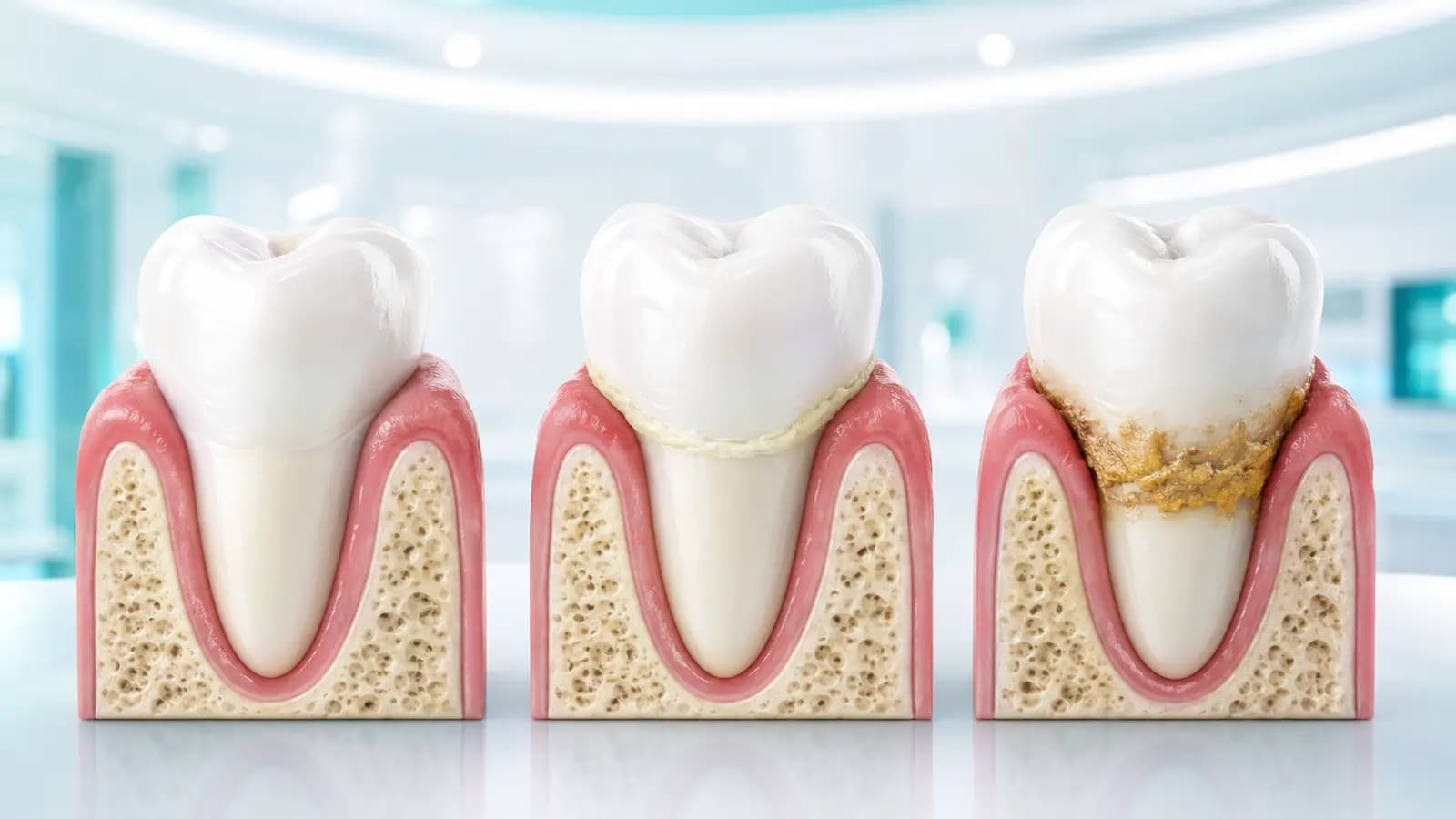
Build up, however, it can cause bad breath, gum inflammation, and damage to the tissues supporting the teeth.
Unlike plaque, which can still be removed with a toothbrush, tartar has hardened and requires professional treatment. Dental scaling is one of the procedures used to remove it.
What Is Dental Tartar?
Dental tartar, or dental calculus, is plaque that has hardened after mixing with minerals in saliva. Plaque itself is a sticky layer containing bacteria, food debris, and other deposits that forms on tooth surfaces and between the teeth.
When plaque is not removed regularly, it can harden and adhere firmly to the teeth. Tartar is commonly found around the gumline, behind the lower front teeth, and on molars located near salivary gland ducts.
By location, tartar is classified as supragingival calculus above the gumline or subgingival calculus below it. Subgingival tartar is usually harder to see and may damage the tissues supporting the teeth.
Causes of Dental Tartar
1. Incorrect or Infrequent Brushing
Brushing too infrequently or using an ineffective technique allows plaque to remain on the teeth. It can then harden and become tartar.
2. Not Cleaning Between the Teeth
A toothbrush cannot always reach the narrow spaces between teeth. Without dental floss, food debris and plaque can accumulate in these areas.
3. Sugary Foods and Drinks
Sweet foods and high-sugar drinks can encourage bacterial growth in the mouth. The bacteria produce acids that increase plaque formation as well as the risk of tooth decay.
4. Smoking
Smoking can accelerate plaque build-up and make tartar appear darker. It also increases the risk of gum disease.
5. Dry Mouth
Saliva helps wash away food debris and maintain the balance of bacteria in the mouth. When saliva production falls, plaque can accumulate more easily and develop into tartar.
Signs of Dental Tartar
1. A Hard Layer on the Teeth
Tartar usually appears as a hard, off-white, yellow, brown, or black layer. It does not come off easily even after brushing.
2. Rough Tooth Surfaces
When touched with the tongue, tooth surfaces covered with tartar may feel rough and uneven.
3. Bad Breath
Bacteria growing in plaque and tartar can produce unpleasant odours. Bad breath may therefore persist even after brushing.
4. Gums That Bleed Easily
Tartar around the gumline can cause irritation. The gums may look red and swollen and bleed easily during brushing.
Risks of Leaving Dental Tartar Untreated
1. Gingivitis
One of the most common risks of tartar is gingivitis, or gum inflammation. It is characterised by red, swollen gums that bleed easily.
2. Periodontitis
Untreated gingivitis can progress to periodontitis. This infection damages the tissues and bone that support the teeth, making them loose and potentially leading to tooth loss.
3. A Higher Risk of Cavities
The rough surface of tartar makes it easier for plaque and bacteria to adhere. This makes cleaning less effective and increases the risk of cavities.
4. Gum Recession
Long-term inflammation can cause the gum tissue to recede and expose the tooth roots. The teeth may appear longer and become more sensitive.
5. Changes to Appearance and Breath
Yellow or brown tartar can affect the appearance of a smile, while bacterial build-up may cause persistent bad breath. Without appropriate treatment, complications can include gingivitis, periodontitis, abscesses, and tooth loss. (Alodokter)
How to Prevent Dental Tartar
1. Brush Twice a Day
Brush in the morning after breakfast and at night before bed with fluoride toothpaste. Clean every tooth surface and the gumline.
2. Use Dental Floss
Floss at least once a day to remove plaque and food debris from spaces that a toothbrush cannot easily reach.
3. Limit Sugar
Reduce sweet foods, fizzy drinks, and snacks that stick easily to the teeth. Choose nutritious foods and drink plenty of water.
4. Avoid Smoking
Stopping smoking can help reduce tartar build-up while lowering the risk of gum disease and tooth discolouration.
5. Have Regular Dental Check-ups
Regular examinations allow a dentist to identify plaque, tartar, and gum problems early. The recommended frequency can be adjusted to each patient’s oral health.
How Dental Tartar Is Removed
Hardened tartar cannot be removed by brushing or mouthwash alone. Do not scrape it with sharp objects, as this can injure the gums and damage the tooth surface.
The correct way to remove tartar is through dental scaling performed by a dentist. This procedure uses a manual or ultrasonic scaler to detach tartar from tooth surfaces and around the gumline.
After scaling, the dentist may polish the teeth to smooth their surfaces. If tartar extends deep below the gums or has caused periodontitis, deeper cleaning such as root planing may be needed. Treatment is selected according to the dental examination. (Halodoc, Primaya Hospital)
Remove Tartar to Keep Your Smile Healthy
Dental tartar should not be ignored because it can cause gingivitis, cavities, periodontitis, and other oral health problems. If you notice a hard layer on your teeth, bad breath, or gums that bleed easily, arrange a dental examination and scaling. For those seeking Dental Care Bali, FLOSS Dental Studio provides professional examinations and treatment tailored to the health of your teeth and gums.