Causes of Bad Breath and How to Get Rid of It
Discover the common causes of bad breath and how to treat them effectively, from tongue cleaning to managing underlying dental and gum problems.
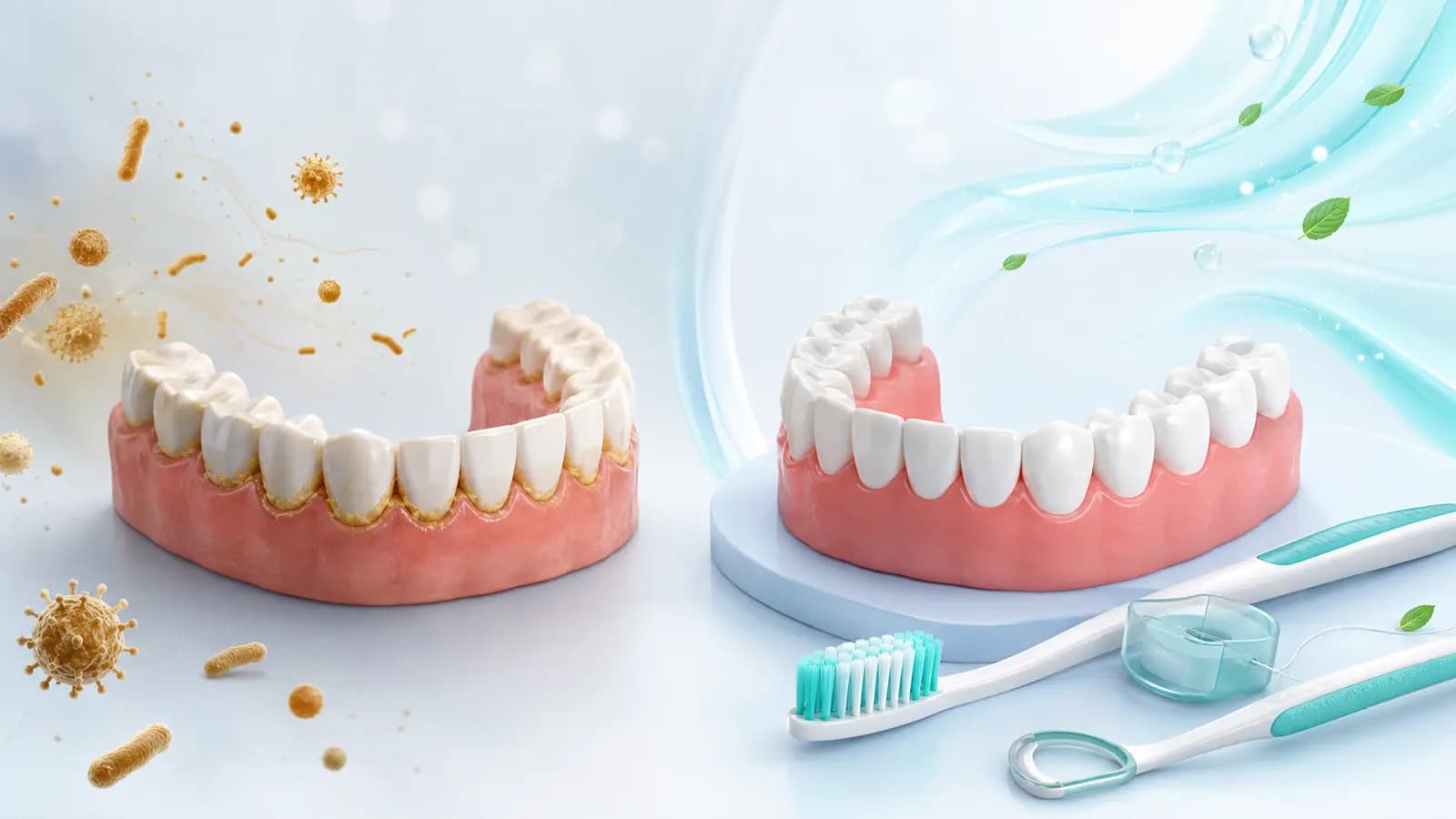
Bad breath, or halitosis, can occur temporarily after eating, but recurring odour is often linked to bacteria in the mouth. These bacteria break down debris and release odorous compounds, particularly on the tongue, between teeth, and around the gums.
Mints and mouthwash may disguise odour briefly. Lasting improvement requires identifying the cause and treating problems such as tooth decay, gum disease, or dry mouth when they are present.
Common Causes of Bad Breath
Poor Cleaning of Teeth and Tongue
Plaque, food debris, and tongue coating allow bacteria to accumulate. Dentures that are not cleaned properly may also develop an odour.
Gum Disease and Tartar
Inflamed gums and periodontal pockets can trap bacteria and produce persistent bad breath.
Tooth Decay or Infection
Large cavities, dental abscesses, broken restorations, and infected wisdom teeth may cause an unpleasant taste and smell.
Dry Mouth
Saliva helps cleanse the mouth. Its flow may fall because of dehydration, mouth breathing, smoking, health conditions, or certain medicines.
Food, Drinks, and Smoking
Garlic, strong spices, coffee, alcohol, and tobacco can affect breath. Smoking also raises the risk of gum disease and dry mouth.
Causes Outside the Mouth
Tonsil stones, nose or throat infections, and some digestive or medical conditions may contribute. Non-dental causes need appropriate medical assessment.
How to Get Rid of Bad Breath
1. Brush Twice a Day
Use fluoride toothpaste for about two minutes and gently clean every tooth surface and the gumline.
2. Clean Between Teeth Daily
Floss or interdental brushes remove debris that a standard toothbrush cannot reach.
3. Clean the Tongue
Use a tongue cleaner or brush gently once a day, paying attention to coating towards the back.
4. Stay Hydrated
Drink water regularly. Sugar-free gum may stimulate saliva for some people, but it does not replace tooth cleaning.
5. Keep Dentures Clean
Remove and clean dentures as instructed, and do not sleep in them unless your dentist advises otherwise.
6. Stop Smoking and Limit Triggers
Reducing tobacco, alcohol, and strongly scented foods can improve breath and support gum health.
7. Have Dental Treatment When Needed
Tartar, cavities, infection, and gum disease require professional care. Mouthwash alone cannot remove these underlying sources.
When Should You See a Dentist?
Arrange an examination if bad breath does not improve after several weeks of good oral care, or if it occurs with bleeding gums, loose teeth, pain, swelling, severe dryness, or a persistent bad taste. If the mouth is healthy, the dentist may recommend a medical review for another cause.
Find the Cause of Halitosis at Floss Dental Studio
Effective bad-breath treatment starts with identifying the cause. Floss Dental Studio can assess the teeth, gums, plaque, and tartar and recommend care that goes beyond temporarily masking odour.