What Are Wisdom Teeth? Causes of Impaction and How to Treat It
Wisdom teeth often cause discomfort when they begin to erupt, ranging from pain at the back of the jaw to swollen gums. This usually happens because there…
Is not enough room for the teeth to grow normally.
In some cases, wisdom tooth growth can also lead to an impacted tooth, which may cause infection and damage the surrounding teeth. So, what exactly are wisdom teeth, and how are problems involving them treated?
What Are Wisdom Teeth?
Wisdom teeth are the third molars located at the very back of the upper and lower jaws. They generally begin to erupt between the ages of 17 and 25, although the timing can vary from person to person.
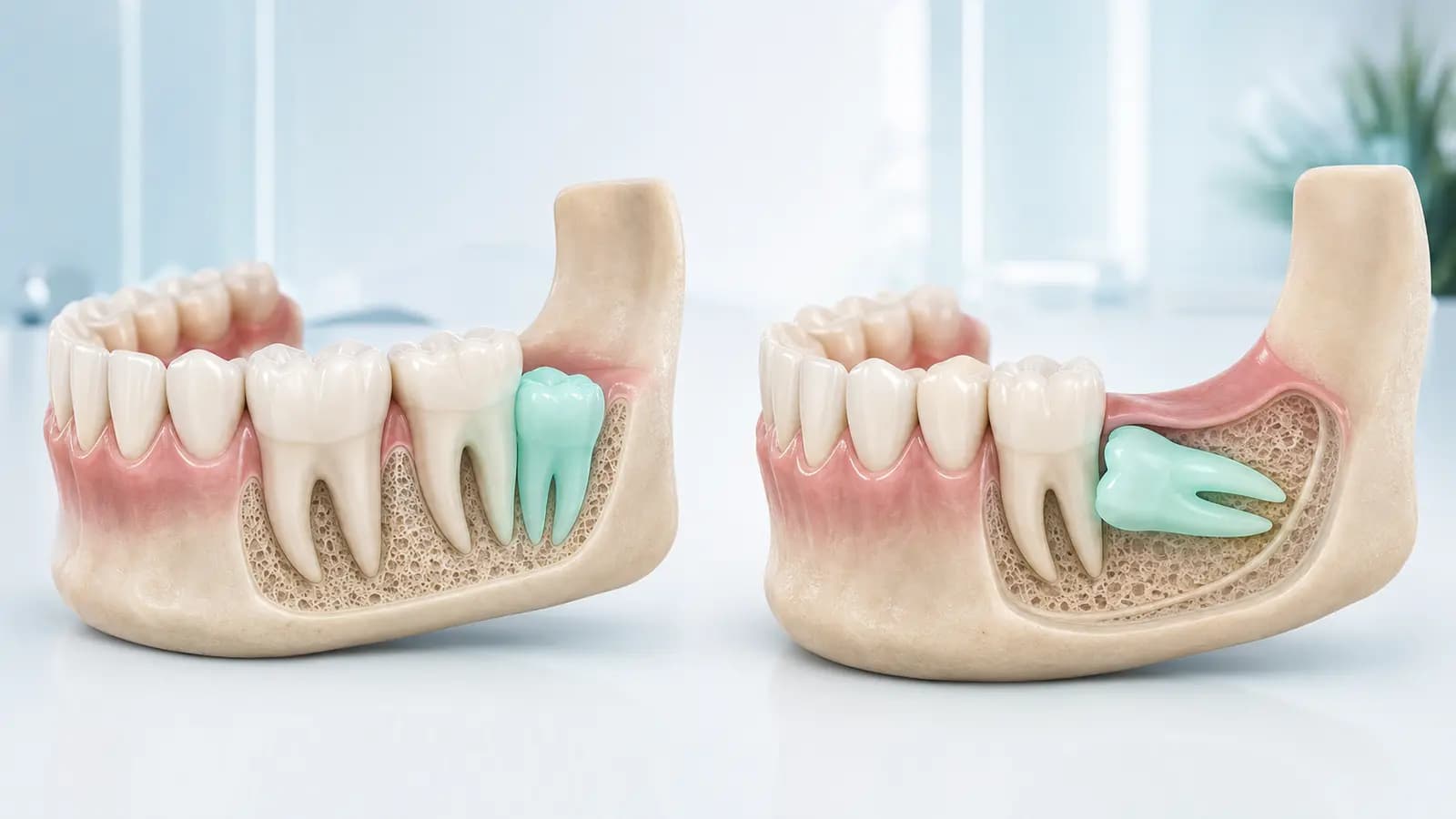
Some wisdom teeth erupt fully without causing problems. However, because they appear last, there is often not enough room for them. As a result, a wisdom tooth may grow at an angle, erupt only partially, or remain trapped beneath the gum and jawbone. This is known as wisdom tooth impaction. (Alodokter)
Causes of Wisdom Tooth Impaction
Impaction occurs when a wisdom tooth cannot erupt or emerge fully. Several conditions may cause this problem:
1. Not Enough Space in the Jaw
A jaw that does not provide enough space is a common reason a wisdom tooth cannot erupt properly. The tooth may become trapped beneath the gum or press against the molar in front of it.
2. Abnormal Tooth Position
A wisdom tooth may angle forwards, backwards, or sideways, or it may lie horizontally within the jawbone. These positions can prevent the tooth from reaching the gum surface.
3. Blocked by Nearby Teeth or Tissues
A wisdom tooth may be obstructed by the molar in front of it, the gum tissue, or the jawbone. As a result, only part of the tooth’s crown may be visible, or the tooth may not emerge at all.
4. Incorrect Eruption Direction
A wisdom tooth erupting in the wrong direction can press against the neighbouring tooth. In addition to causing pain, this may damage the second molar if left untreated.
Signs of a Problematic Wisdom Tooth
A wisdom tooth that erupts normally generally does not cause symptoms. Problems usually appear when there is impaction, inflammation, or infection.
1. Pain at the Back of the Jaw
Pain may develop in the gum at the very back of the mouth and may sometimes radiate to the jaw, ear, or head. It can become more intense when chewing.
2. Red and Swollen Gums
The gum around the tooth may become inflamed, red, swollen, and painful to the touch. Inflammation around the crown of a wisdom tooth is called pericoronitis.
3. Difficulty Opening the Mouth
Swelling and inflammation can make the jaw feel stiff. This may make it difficult to open the mouth, speak, or chew food.
4. Bad Breath or an Unpleasant Taste
A partially erupted tooth can create a pocket between the tooth and gum. Food debris and bacteria can easily become trapped there, causing bad breath or an unpleasant taste in the mouth.
5. Swelling of the Jaw or Cheek
A more severe infection may cause the jaw or cheek to swell. Seek prompt dental care if the swelling is accompanied by fever, severe pain, or difficulty swallowing.
An untreated impacted tooth may increase the risk of tooth decay, gum disease, an abscess, a cyst, and damage to the adjacent tooth. (NHS)
How to Reduce the Risk of Wisdom Tooth Problems
Wisdom tooth impaction cannot always be prevented because it is related to the amount of space in the jaw and the direction of tooth growth. However, the risk of infection and complications can be reduced in several ways:
1. Maintain Good Oral Hygiene
Brush twice a day with fluoride toothpaste. Clean between the teeth as well so that food debris does not accumulate around the back molars.
2. Clean the Wisdom Tooth Area Thoroughly
Use a small-headed toothbrush to reach the back of the mouth. If the tooth has only partially erupted, gently clean around it to prevent plaque build-up.
3. Have Regular Dental Check-ups
Regular examinations allow a dentist to monitor the direction in which a wisdom tooth is growing. If needed, dental X-rays can show its position within the jaw before complications develop.
How Problematic Wisdom Teeth Are Treated
Treatment is tailored to the tooth’s position, the degree of impaction, and the patient’s symptoms. Options may include:
1. Regular Monitoring
An impacted tooth that causes no symptoms and does not damage surrounding tissues may not need to be removed immediately. A dentist can monitor it through regular examinations.
2. Cleaning the Inflamed Area
A dentist can remove food debris and bacteria trapped around the tooth. The patient will also receive instructions on keeping the area clean while it recovers.
3. Medication Based on a Dental Assessment
Pain-relieving medicine may help reduce discomfort. If a specific infection is identified, the dentist will determine whether additional treatment is needed. Do not take antibiotics without an examination and prescription.
4. Wisdom Tooth Extraction
Extraction may be performed when the tooth’s position allows a relatively straightforward procedure. A local anaesthetic is given first to keep the patient comfortable during treatment.
5. Wisdom Tooth Surgery
Surgical wisdom tooth removal, also known as an odontectomy, is generally needed when the tooth remains embedded in the gum or jawbone, grows at an angle, or cannot be removed with a routine extraction. The dentist or oral surgeon opens part of the gum tissue, removes any obstructing bone if necessary, and then removes the tooth whole or divides it into smaller sections.
After the procedure, the patient may experience mild pain, swelling, and jaw stiffness for several days. Following the dentist’s instructions, eating soft foods, keeping the wound clean, and avoiding smoking can support recovery.
Treat Wisdom Teeth Before Complications Develop
Pain or swelling at the back of the jaw should not be ignored, especially when it interferes with daily activities. Have your wisdom teeth examined at FLOSS Dental Studio, a Dental Care Bali option for impacted-tooth assessment and wisdom tooth surgery based on your needs. The dentist will evaluate the tooth’s position thoroughly and recommend safe treatment for your condition.