Tooth Extraction: When Is It Needed and What Are the Risks?
Learn when tooth extraction is needed, how dentists assess the tooth, possible risks, and what to expect before, during, and after the procedure.
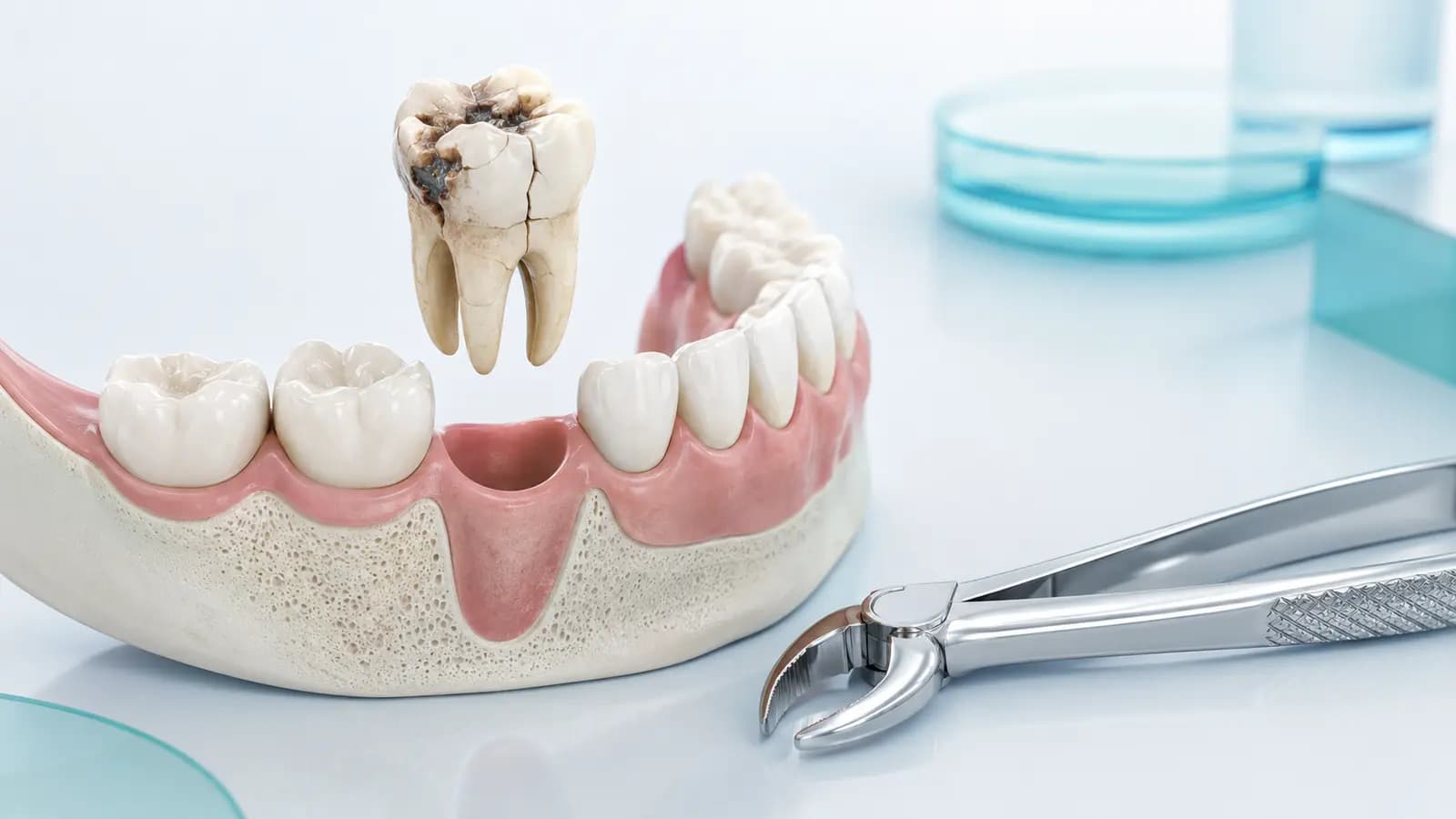
A tooth extraction removes a tooth from its socket in the jawbone. It is usually considered when a tooth cannot be predictably restored or when keeping it is likely to harm nearby teeth and tissues.
The dentist assesses the tooth, gums, roots, and bone, using X-rays when required. Pain alone does not always mean extraction is necessary because some teeth can still be saved with a filling, crown, or root canal treatment.
When Is Tooth Extraction Necessary?
1. Extensive Tooth Damage
A severely decayed or fractured tooth may not have enough healthy structure left to support a reliable restoration.
2. Infection with a Poor Prognosis
Root canal treatment is often considered for an infected pulp. Extraction may be advised when this is not possible, has failed, or the tooth has a very poor long-term outlook.
3. Advanced Gum Disease
Severe loss of supporting bone from periodontitis can leave a tooth very loose and unable to function.
4. Problematic Wisdom Teeth
An impacted wisdom tooth that repeatedly becomes infected, damages the adjacent tooth, or cannot be cleaned may need simple or surgical removal.
5. Orthodontic Space Requirements
In selected cases, extraction forms part of an orthodontic plan to create space. The decision should follow a full analysis of the teeth and jaws.
How Is a Tooth Removed?
For a simple extraction, local anaesthetic is used before the tooth is loosened and lifted from the socket. A tooth that is impacted, broken below the gum, or difficult to access may require a surgical extraction involving a small incision and sometimes sectioning the tooth.
Possible Risks After Extraction
Bleeding and Swelling
Mild bleeding and swelling are expected during early healing. Persistent bleeding or increasing swelling should be assessed promptly.
Dry Socket
Dry socket occurs when the protective blood clot is lost or does not form properly. It can cause severe pain several days after extraction and requires dental care.
Infection
Worsening pain or swelling, fever, pus, or an unpleasant taste may indicate infection.
Injury to Nearby Structures
Depending on the tooth position, complications may involve a neighbouring tooth, the sinus, or a nerve that supplies feeling to the lip and chin. The dentist should explain case-specific risks before treatment.
Aftercare Following Tooth Extraction
Bite on gauze as directed and do not rinse or spit forcefully during the first 24 hours. Avoid smoking, straws, alcohol, hot foods, and strenuous activity. Choose soft foods, brush the other teeth normally, and begin gentle salt-water rinses after 24 hours if advised. Seek help for persistent bleeding, severe pain, fever, or worsening swelling.
Plan Your Extraction at Floss Dental Studio
Extraction should follow a diagnosis and consideration of whether the tooth can still be saved. Floss Dental Studio provides dental examinations and tooth extraction in Bali, together with a treatment plan and personalised aftercare instructions.