What Are Dental Fillings? Benefits, Types, and Procedure
A dental filling is a common treatment for cavities and minor tooth damage. During the procedure, the damaged part of the tooth is cleaned and the resulting…
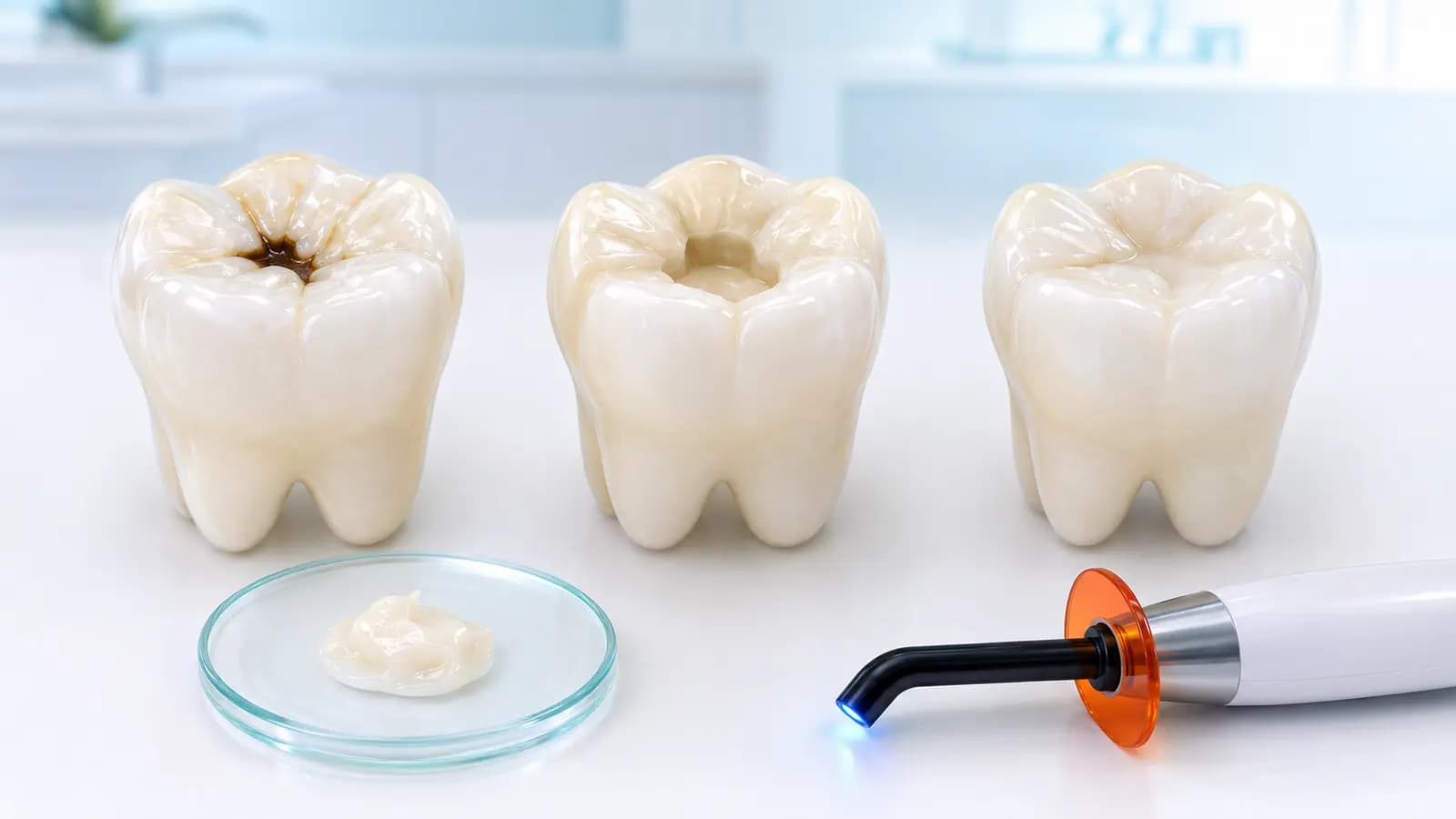
Space is sealed with a suitable filling material.
A tooth should ideally be filled before the damage reaches the nerve. Delayed treatment can allow the cavity to grow, increasing the risk of infection, severe toothache, and the need for root canal treatment.
What Is a Dental Filling?
A dental filling is a restorative procedure used to repair a tooth that is decayed, cracked, chipped, or worn. The dentist removes damaged tissue and fills the area with an appropriate material.
The main purpose is to restore the tooth’s shape and function while preventing the damage from spreading. The filling also closes spaces where bacteria and food debris could enter.
In addition to decay, fillings may treat damage caused by trauma, teeth grinding, abrasion, or erosion of the tooth surface. Treatment is selected according to the location and extent of the damage.
Benefits of Dental Fillings
1. Stops Tooth Damage
The dentist removes damaged tooth tissue before placing the filling. This helps stop decay from progressing and protects the remaining healthy structure.
2. Restores Chewing Function
A cavity can cause pain or discomfort while chewing. A filling restores the tooth’s shape so it can function more effectively.
3. Reduces Sensitivity
A filling closes exposed areas of the tooth. This helps prevent hot, cold, sweet, or acidic foods and drinks from easily reaching sensitive tooth layers.
4. Preserves the Natural Tooth
Early filling treatment can prevent damage from reaching the pulp or root. This helps preserve the natural tooth and reduces the likelihood of extraction.
5. Improves the Tooth’s Appearance
Tooth-coloured materials can repair a decayed, cracked, or chipped tooth, making its shape look neater and more natural.
Types of Dental Filling Materials
Filling material is not selected on price alone. The dentist also considers the tooth’s location, the extent of damage, biting pressure, aesthetic needs, and the patient’s health.
1. Composite Resin
Composite resin is widely used because its colour can be matched to natural teeth. It is suitable for front or back teeth with mild to moderate damage.
2. Glass Ionomer Cement
Glass ionomer cement, or GIC, combines glass-based material with acrylic acid. It is often used for baby teeth, small cavities, or areas that do not bear heavy chewing pressure.
3. Porcelain or Ceramic
Porcelain restorations resemble natural tooth colour and are relatively resistant to staining. They are usually made outside the mouth to fit the patient’s tooth, so the process and cost may be greater.
4. Gold Alloy
Gold fillings are strong and durable. However, their colour differs from natural teeth, they are relatively expensive, and placement usually requires more than one visit.
5. Temporary Filling
A temporary filling protects a tooth for a limited period, such as between stages of root canal treatment or while the dentist monitors the tooth before placing a permanent restoration.
Dental Filling Procedure
A filling may be placed directly in one visit or indirectly after a restoration is made outside the mouth. The procedure generally includes the following stages:
1. Examination of the Tooth
The dentist examines the location and depth of the damage. An X-ray may be needed if the cavity is thought to be close to the nerve or if some damage cannot be seen directly.
2. Local Anaesthetic
Local anaesthetic may be given to numb the area around the tooth. Whether it is required depends on the depth of the cavity and the patient’s sensitivity.
3. Removal of Damaged Tissue
The decayed part of the tooth is removed with specialised instruments. The area is then cleaned so no damaged tissue or debris remains.
4. Placement of the Filling Material
The filling material is placed into the cleaned space. Composite resin is usually applied in layers and cured with a special light.
5. Bite Adjustment
The patient bites on marking paper so the dentist can check that the filling is not too high. The material is then shaped and adjusted until biting feels comfortable.
6. Polishing
The final step is polishing the filling to make it smoother. This also helps reduce the chance of food debris and plaque adhering to a rough surface.
Care After a Dental Filling
After treatment, the tooth may feel slightly sensitive to pressure or temperature. This usually improves gradually. Avoid chewing hard food on the newly filled tooth and follow the dentist’s advice about when it is safe to eat.
Protect the filling by brushing twice a day with fluoride toothpaste, cleaning between the teeth, and attending regular check-ups. Contact the dentist if the filling feels too high, has a sharp edge, cracks or comes loose, or if pain does not improve within several weeks.
Treat Cavities Before They Get Worse
A cavity cannot heal with pain relief alone and should be examined to determine the right treatment. If you need a dental filling or want to understand the available filling materials, consult a dentist at FLOSS Dental Studio, a professional Dental Care Bali option that prioritises treatment based on each patient’s needs.