What Is Tooth Decay? Causes, Stages, and Treatment Options
Learn what tooth decay is, its causes, symptoms, stages, prevention, and treatment options to stop the condition from worsening.
Tooth decay is one of the most common dental health problems affecting both children and adults. It can develop gradually and may not cause noticeable symptoms during its early stages.
However, untreated tooth decay can progress deeper and eventually reach the tooth’s nerve. This may cause sensitivity, pain when chewing, or even infection. Therefore, it is important to understand what tooth decay is, its causes, stages, symptoms, prevention, and available treatments.
What Is Tooth Decay?
Tooth decay is permanent damage to the tooth structure caused by dental caries. It begins when bacteria in plaque convert sugars and carbohydrates from food into acid. This acid gradually removes minerals from the tooth’s outermost layer, known as the enamel.
During the early stages, tooth decay may appear as white spots caused by mineral loss from the enamel. At this point, the damage may still be stopped through remineralisation. However, once the enamel has broken down and a cavity has formed, it cannot heal on its own and requires professional dental treatment.
If left untreated, tooth decay can spread to the dentine, pulp, and tissues surrounding the tooth root. This may lead to severe pain, an abscess, or even tooth loss.
Causes of Tooth Decay
Tooth decay begins with plaque that builds up on the surface of the teeth. Plaque consists of bacteria, saliva, and food particles containing sugars and carbohydrates.
The bacteria in plaque convert sugar into acid. When plaque is not removed, this acid continuously attacks the minerals in the enamel. Over time, the tooth becomes weaker and a cavity begins to form.
Several factors can increase the risk of tooth decay, including:
- Rarely brushing your teeth or using an incorrect brushing technique.
- Not cleaning between the teeth with dental floss.
- Frequently consuming sugary foods and drinks.
- Snacking too often between meals.
- Not using fluoride toothpaste.
- Experiencing dry mouth or reduced saliva production.
- Frequently consuming acidic foods or drinks.
- Having acid reflux.
- Having damaged or worn dental fillings.
- Not attending regular dental check-ups.
Saliva helps remove food particles, neutralise acids, and provide minerals that support enamel repair. Therefore, people with dry mouth may have a higher risk of developing tooth decay.
Stages of Tooth Decay
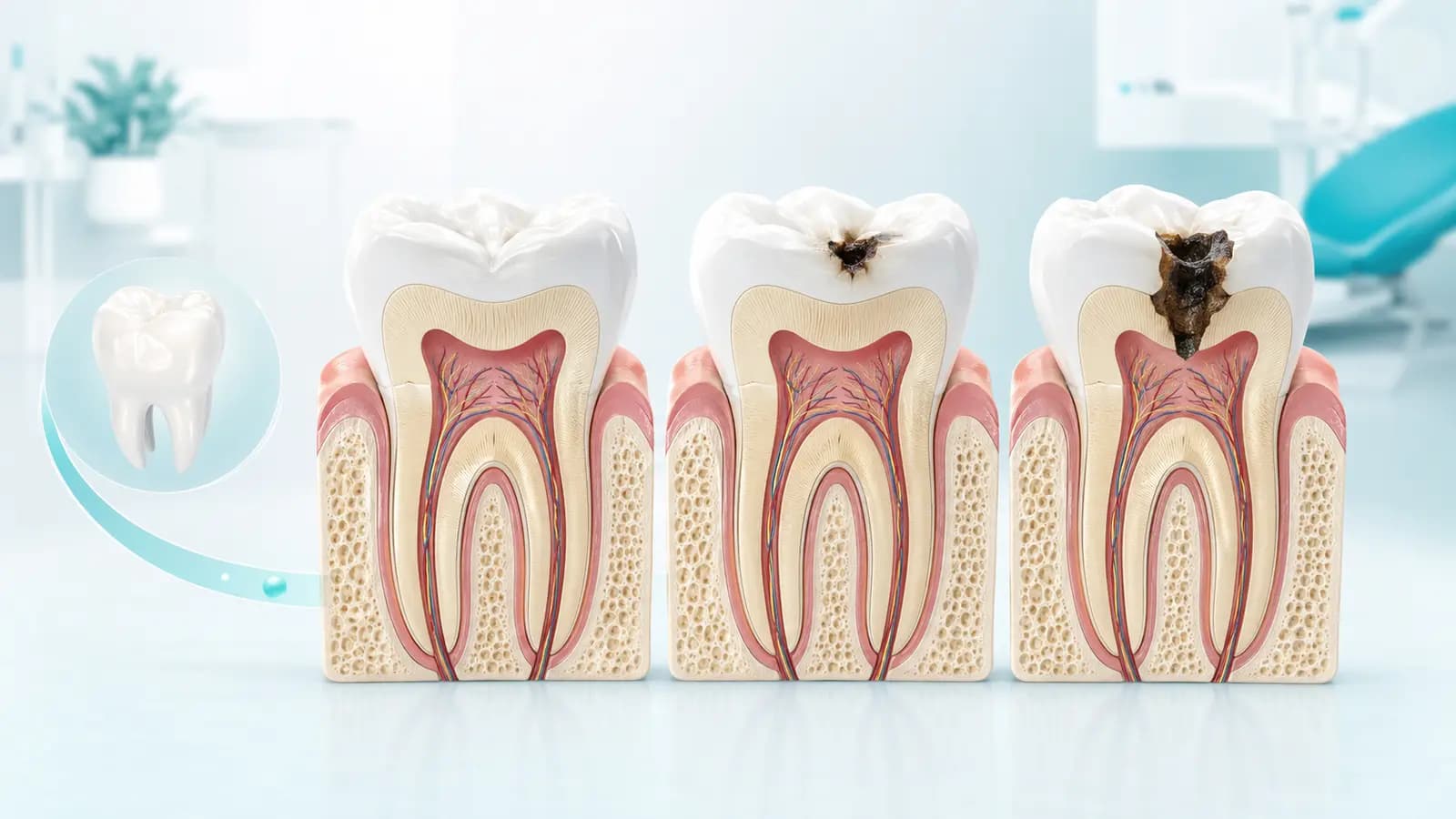
Tooth decay does not immediately develop into a large cavity. It progresses gradually, beginning with mineral loss from the enamel and potentially developing into an infection inside the tooth.
1. Enamel Demineralisation
The first stage is characterised by mineral loss from the enamel due to repeated exposure to acid. White spots may appear on the tooth surface as an early sign of tooth decay.
At this stage, a permanent cavity has not yet formed. A dentist may recommend fluoride treatment and improvements to your oral hygiene routine to support remineralisation.
2. Enamel Decay
If demineralisation continues, the enamel becomes weaker and a small cavity may begin to form. This stage may not cause pain because enamel does not contain nerves.
Even without symptoms, a cavity that has already formed should be treated to prevent the decay from spreading into the deeper layers of the tooth.
3. Decay Reaches the Dentine
Dentine is the layer beneath the enamel. Because it is softer than enamel, tooth decay can progress more quickly once it reaches this layer.
At this stage, the tooth may become sensitive when exposed to sweet, hot, or cold foods and drinks. Pain may also occur when biting or chewing.
4. Decay Reaches the Pulp
The pulp is the innermost part of the tooth and contains nerves and blood vessels. When bacteria reach this area, the pulp can become inflamed or infected.
Symptoms may include throbbing toothache, spontaneous pain, or discomfort that interferes with sleep. Root canal treatment is usually required to remove the infected tissue and preserve the tooth.
5. A Dental Abscess Forms
An untreated infection can spread to the tip of the tooth root and form a pus-filled pocket known as a dental abscess. Symptoms may include swollen gums or facial swelling, fever, bad breath, and severe pain.
A dental abscess requires immediate treatment because the infection can spread to the surrounding tissues. The tooth may still be saved through root canal treatment, but extraction may be necessary if the damage is too severe.
Symptoms of Tooth Decay
The symptoms of tooth decay can vary depending on the location and severity of the damage. During the early stages, tooth decay may not cause any noticeable symptoms.
As the cavity becomes larger, symptoms may include:
- Increased tooth sensitivity.
- Sensitivity when consuming sweet, hot, or cold foods and drinks.
- Pain when biting or chewing.
- Toothache that occurs without an obvious cause.
- White, brown, or black spots on the tooth surface.
- A visible hole in the tooth.
- Persistent bad breath.
- Swollen gums around the affected tooth.
- A tooth that becomes fragile, worn, or broken.
The visible size of a cavity does not always indicate how severe the internal damage is. A dentist may need to perform a clinical examination and take dental X-rays to determine the depth of the decay.
When Should You See a Dentist?
Visit a dentist if you experience persistent tooth pain or notice changes to the surface of your teeth. Early treatment can prevent the damage from progressing to the tooth’s nerve.
Seek dental care promptly if you experience:
- Tooth pain that interferes with eating or sleeping.
- Swelling of the gums, cheek, or face.
- Pus coming from the area around the tooth.
- Fever accompanied by toothache.
- Difficulty opening your mouth or chewing.
- A broken or loose tooth.
How to Prevent Tooth Decay
Tooth decay can be prevented by maintaining good oral hygiene and reducing the frequency of sugar exposure. Consistent dental care habits can help protect the enamel and lower the risk of new cavities.
Ways to prevent tooth decay include:
- Brush your teeth twice a day with fluoride toothpaste.
- Brush for approximately two minutes using the correct technique.
- Clean between your teeth daily with dental floss.
- Limit foods and drinks that contain high amounts of sugar.
- Reduce snacking between meals.
- Avoid frequently sipping sugary or carbonated drinks.
- Drink plenty of water.
- Replace your toothbrush when the bristles become worn.
- Attend regular dental check-ups and professional cleaning appointments.
- Consider fluoride treatment or dental sealants if recommended by your dentist.
Regular dental examinations are important because early tooth decay often does not cause pain. Early detection allows the condition to be treated before it progresses deeper and requires more complex procedures.
Treatment for Tooth Decay
Treatment for tooth decay depends on the location and severity of the damage. A dentist will need to examine your teeth before recommending the most appropriate treatment.
1. Fluoride Treatment
Fluoride treatment may be recommended when tooth decay is still in its early stage and a permanent cavity has not yet formed. Fluoride helps restore minerals to the enamel and slows the progression of decay.
Professional fluoride treatments are available as gels, liquids, foams, or varnishes applied directly to the tooth surface by a dentist.
2. Dental Filling
A dental filling is required when a cavity has formed in the enamel or dentine. The dentist removes the damaged tissue before filling the cavity with a material such as composite resin.
A filling restores the shape and function of the tooth while preventing bacteria from spreading deeper into the tooth structure.
3. Dental Crown
If the decay is extensive and the tooth structure has become weak, the dentist may recommend a dental crown. A crown protects the remaining tooth and restores its ability to bite and chew.
Before placing the crown, the damaged part of the tooth is cleaned and reshaped to ensure that the crown fits properly.
4. Root Canal Treatment
Root canal treatment is required when decay or infection has reached the pulp. The dentist removes the infected tissue, disinfects the root canals, and then fills and seals them.
This treatment is designed to preserve the natural tooth and avoid the need for extraction.
5. Tooth Extraction
Tooth extraction is considered a last resort when the damage is too severe and the tooth can no longer be saved. After the extraction, the dentist may recommend a denture, dental bridge, or implant to replace the missing tooth.
Pain-relief medication can only provide temporary relief. It cannot close a cavity or repair damaged tooth tissue. A dental examination is still necessary to identify and treat the underlying cause.
Treat Tooth Decay at FLOSS Dental Studio Bali
Do not wait until tooth decay causes severe pain and disrupts your daily activities. Get a professional dental examination and personalised treatment at FLOSS Dental Studio Bali. Supported by experienced dentists and modern facilities, FLOSS Dental Studio provides treatments ranging from dental fillings and crowns to root canal treatment and other procedures needed to restore your oral health and confidence. Schedule your consultation today and treat tooth decay before the damage progresses further.