What Are Molars? Learn Their Functions, Types, and How to Care for Them
Molars are the largest teeth in the mouth and are located at the back. Their broad, grooved surfaces allow them to crush, grind, and break down food before…
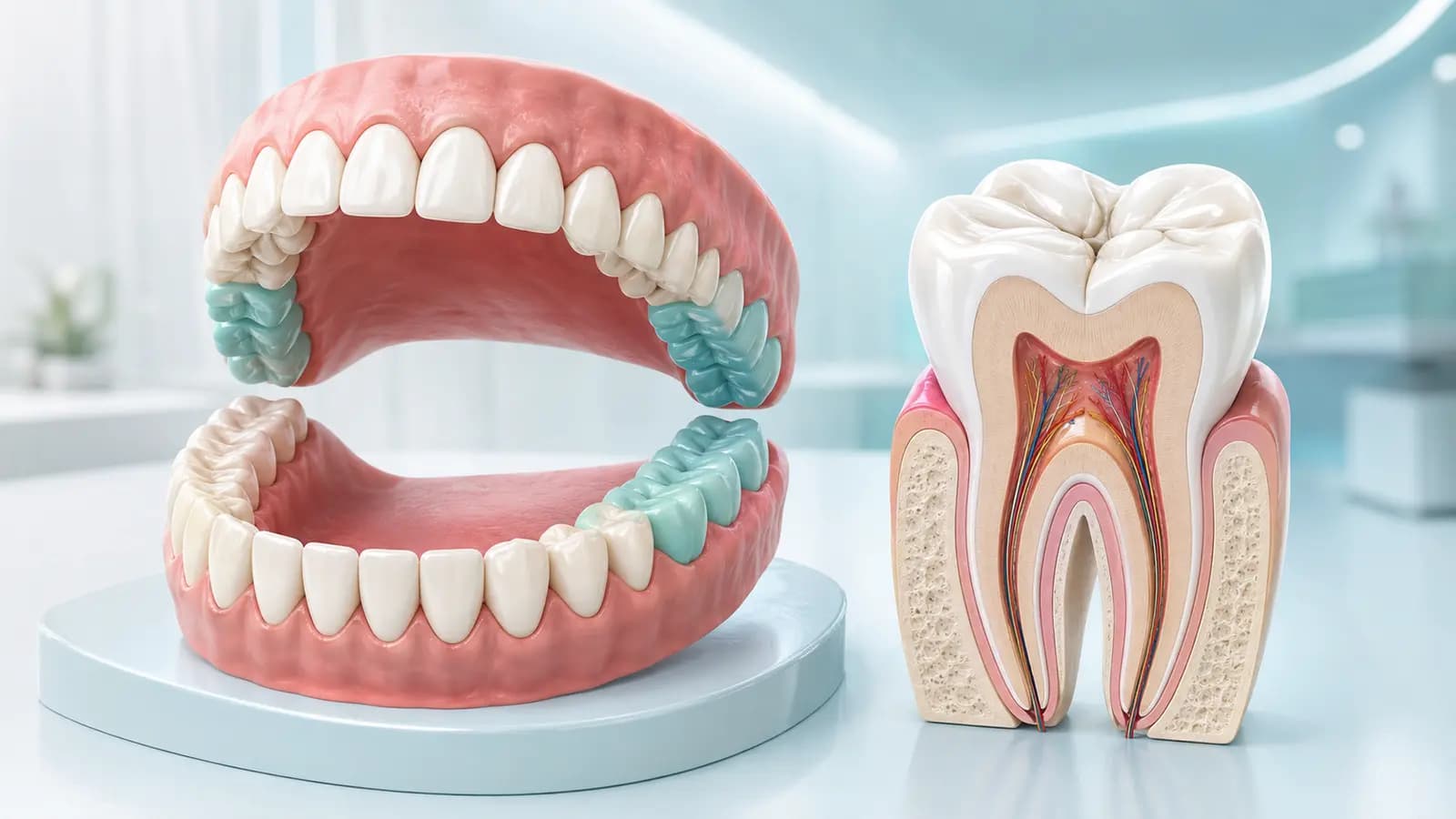
It is swallowed.
Adults generally have 12 molars, including four wisdom teeth. Molars are found on both sides of the upper and lower jaws, which is why they are also commonly called back teeth.
What Are Molars and What Types Are There?
Molars have broad crowns with several raised points on their chewing surfaces. This structure helps break down hard or fibrous foods into smaller, softer pieces.
First Molars
First molars usually erupt at around six years of age. For this reason, they are also known as six-year molars. These teeth play an important role in chewing once a child begins developing permanent teeth.
Second Molars
Second molars generally erupt at around 12 years of age. They are located directly behind the first molars and also help crush and grind food.
Third Molars or Wisdom Teeth
Third molars are commonly known as wisdom teeth. They usually erupt between the ages of 17 and 21 and are located at the very back of the mouth. However, not everyone has enough space for them to grow properly. As a result, these back molars may grow at an angle, remain trapped beneath the gums, or only partially emerge.
Functions of Molars
The function of molars extends beyond simply chewing food. Here are some of their important roles in the mouth.
1. Crushing and Grinding Food
The broad surfaces of molars help break food into smaller pieces. Properly ground food is easier to swallow and process through the digestive system.
2. Supporting the Chewing Process
Molars work together with incisors, canines, and premolars. Incisors cut food, canines tear it, and molars grind it until the texture becomes softer and easier to swallow.
3. Maintaining Proper Tooth Alignment
Molars also help maintain the position of the surrounding teeth. Losing one or more molars may cause nearby teeth to shift into the empty space, potentially affecting bite alignment.
Common Problems Affecting Molars
Because they are located at the back of the mouth, molars can be difficult to reach when brushing. Food particles and plaque are therefore more likely to accumulate in this area.
1. Molar Cavities
Molars have grooves where food particles can easily become trapped. If they are not cleaned properly, bacteria can produce acids that damage the enamel and cause cavities.
2. Cracked or Broken Molars
Biting hard foods, grinding the teeth, or having severe tooth decay can cause a molar to crack or break. This condition may result in pain when chewing.
3. Impacted Wisdom Teeth
Impaction occurs when a wisdom tooth does not have enough space to grow normally. It may grow at an angle, partially emerge, or remain trapped beneath the gums. Symptoms can include pain, swollen gums, difficulty opening the mouth, and infection.
How to Prevent Molar Problems
Maintaining consistent oral hygiene is essential to prevent molars from developing cavities or other dental problems.
1. Brush Your Teeth Twice a Day
Brush your teeth in the morning and before bed using fluoride toothpaste. Make sure to clean the back molars thoroughly, as these areas are particularly prone to plaque accumulation.
2. Clean Between Your Teeth with Dental Floss
Brushing alone may not remove food particles trapped between the molars. Use dental floss at least once a day to clean areas that a toothbrush cannot easily reach.
3. Limit Sugary and Sticky Foods
Foods high in sugar and sticky foods can remain on the tooth surfaces for longer. This increases the risk of molar cavities, especially if the mouth is not cleaned soon after eating.
4. Visit a Dentist Regularly
Dental check-ups every six months can help detect small cavities, tartar buildup, and wisdom tooth growth problems at an early stage. Early treatment can prevent more serious damage.
How to Treat Molar Problems
Treatment for molar problems depends on the cause and severity of the damage. A direct examination by a dentist is necessary to determine the most appropriate treatment.
1. Dental Fillings for Mild to Moderate Cavities
If the decay has not reached the tooth’s nerve, the dentist may remove the damaged portion and place a filling. A filling restores chewing function and prevents the cavity from becoming larger.
2. Root Canal Treatment for Nerve Infections
A deeply decayed molar that causes throbbing pain may require root canal treatment. This procedure removes infected nerve tissue so the natural tooth can be preserved.
3. Extraction of Problematic Wisdom Teeth
Wisdom teeth that grow at an angle, cause recurring pain, or lead to infection may need to be removed. The dentist will determine the most suitable treatment based on the condition of the tooth and the examination results.
Maintain Healthy Molars with a Dentist in Bali
Molars play an essential role in chewing and maintaining proper tooth alignment. Do not ignore pain, cavities, or swelling around the back molars, as these conditions may develop into more serious dental problems.
If you are experiencing problems with your molars, visit a trusted dental care provider in Bali, such as FLOSS Dental Studio. A dentist can recommend the appropriate treatment, including professional cleaning, dental fillings, root canal treatment, or wisdom tooth extraction.