What Are Canine Teeth? Functions, Types, and How to Care for Them
Human teeth consist of several types with different shapes and functions, including incisors, canines, premolars, and molars. Canine teeth are among the…
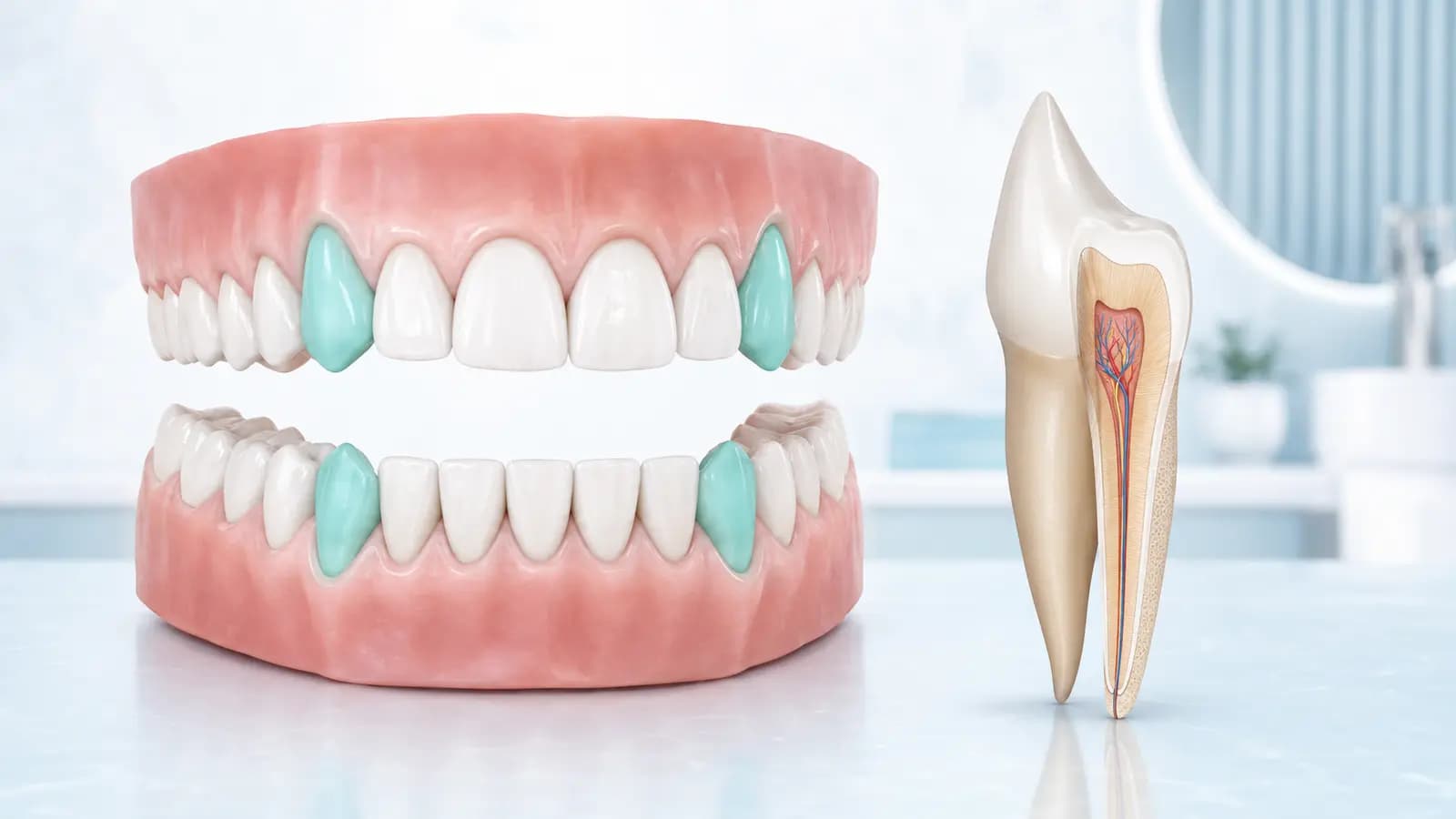
Canine teeth are easy to recognise because they are longer and more pointed than the other teeth. They sit between the incisors and premolars, forming a transition between the front and back sections of the dental arch.
Although they are smaller than molars, canine teeth play an important role in tearing food, supporting a stable bite, and shaping the smile. Understanding what canine teeth are can also help you recognise normal development and know when a dental examination may be needed.
What Are Canine Teeth?
Canine teeth are cone-shaped teeth with a relatively pointed tip. In dentistry, they are also known as canines or cuspids. Their crowns are shaped to grip and tear food before the premolars and molars break it down further.
Most people have four permanent canine teeth, with one on each side of the upper and lower jaws. Before the permanent teeth erupt, children also have four primary canine teeth, which eventually fall out and are replaced by permanent canines.
Location and Characteristics of Canine Teeth
Canine teeth are positioned next to the lateral incisors and immediately before the premolars. This places them at the corners of the dental arch. Upper canines often appear more prominent, while lower canines are usually slightly smaller.
A canine tooth typically has a crown with one pointed cusp and a long, strong root. This shape helps it withstand pressure when biting and tearing food. However, the shape and degree of sharpness can vary from one person to another.
Functions of Canine Teeth
Canine teeth do more than tear food. Their position and shape allow them to support several functions within the mouth. The main functions of canine teeth include:
- Gripping and tearing fibrous or firm foods.
- Helping guide food from the front teeth towards the premolars and molars.
- Supporting bite stability and, in many people, helping guide the jaw during side-to-side movement.
- Creating a natural transition between the front and back teeth, which influences the shape of the smile.
Because canine teeth contribute to the bite, changes in their position or the loss of a canine may affect how chewing forces are distributed. A dentist should evaluate the overall condition before recommending treatment involving these teeth.
Types of Canine Teeth by Development Stage
Primary Canine Teeth
Primary canine teeth generally begin to erupt at around 16 to 23 months of age, although timing can vary between children. These teeth help children chew and preserve space for the permanent teeth developing inside the jaws.
Primary canines should not be removed too early without a dental indication. Losing a primary tooth before the appropriate time may affect the available space and eruption path of the permanent tooth.
Permanent Canine Teeth
The lower permanent canines usually erupt at around 9 to 10 years of age, while the upper permanent canines commonly appear at around 11 to 12 years. Some variation is normal because every child develops at a different rate.
If one canine has not erupted while the matching tooth on the other side has already appeared, a dentist may perform an examination and take a dental X-ray to assess the tooth’s position within the jaw.
Common Problems Affecting Canine Teeth
Canine teeth can develop many of the same problems as other teeth. However, their position and eruption pattern also make them vulnerable to certain conditions. Common problems include:
- Canine teeth that erupt crowded, tilted, or outside the dental arch.
- Impacted canines that remain trapped in the gum or jawbone and do not erupt normally.
- Tooth decay caused by plaque, particularly where the canine meets the neighbouring teeth.
- Worn, cracked, or chipped tips caused by trauma, teeth grinding, or excessive bite pressure.
- Gum recession that exposes part of the root and increases sensitivity.
Upper canine teeth are among the teeth that can become impacted. If the condition is not detected, the tooth may affect the roots of neighbouring teeth or create a swelling in the gum. Early assessment helps the dentist determine whether the canine can be guided into the correct position.
Do Protruding Canine Teeth Need Treatment?
A canine that appears prominent or sits higher than the other teeth is not always harmful. Treatment is usually considered when its position makes cleaning difficult, affects the bite, causes soft-tissue irritation, or creates an aesthetic concern for the patient.
Treatment depends on the tooth’s position, the available space, root condition, and jaw relationship. A dentist may recommend orthodontic treatment, a procedure to create an eruption path for an impacted canine, or restorative care for a chipped tooth. Do not file down or remove a canine simply to alter its appearance without a dental examination.
How to Care for Canine Teeth
Caring for canine teeth is similar to caring for the rest of the mouth, but the corners of the dental arch should be cleaned carefully. Helpful steps include:
- Brush twice a day using fluoride toothpaste.
- Clean between the teeth every day with dental floss or a suitable interdental cleaner.
- Limit how often you consume foods and drinks that are high in sugar.
- Avoid chewing ice, opening packages with your teeth, or biting hard objects.
- Wear a mouthguard during sports that carry a risk of impact to the mouth.
- Attend regular dental check-ups so decay, wear, or eruption problems can be identified early.
When Should You See a Dentist?
A dental examination is recommended if a canine has not erupted at the expected age, grows out of alignment, or causes symptoms. Seek dental advice if you notice:
- Pain, swelling, or a lump in the gum around a canine tooth.
- A canine that is chipped, discoloured, or unusually sensitive.
- Difficulty biting or discomfort when moving the jaw.
- A primary canine that remains in place when the permanent tooth should be erupting.
- A noticeable difference in eruption timing between the right and left canines.
A dentist can perform a clinical examination and, when necessary, take a dental X-ray to assess the tooth’s position and root condition. Treatment will be tailored to the underlying cause while preserving the tooth’s function whenever possible.
Keep Your Canine Teeth Healthy at FLOSS Dental Studio Bali
Now that you understand what canine teeth are, their functions, and the problems that can affect them, you will be better prepared to notice changes. If a canine is painful, has not erupted, appears out of alignment, or affects your bite, arrange an examination at FLOSS Dental Studio Bali. The dentist will assess your teeth and recommend care suited to your needs.