Interdental Brushes: How to Choose a Size and Use Them
Interdental brushes clean the spaces your regular toothbrush cannot reach. Choose a brush whose bristles touch both sides of the gap while the centre…
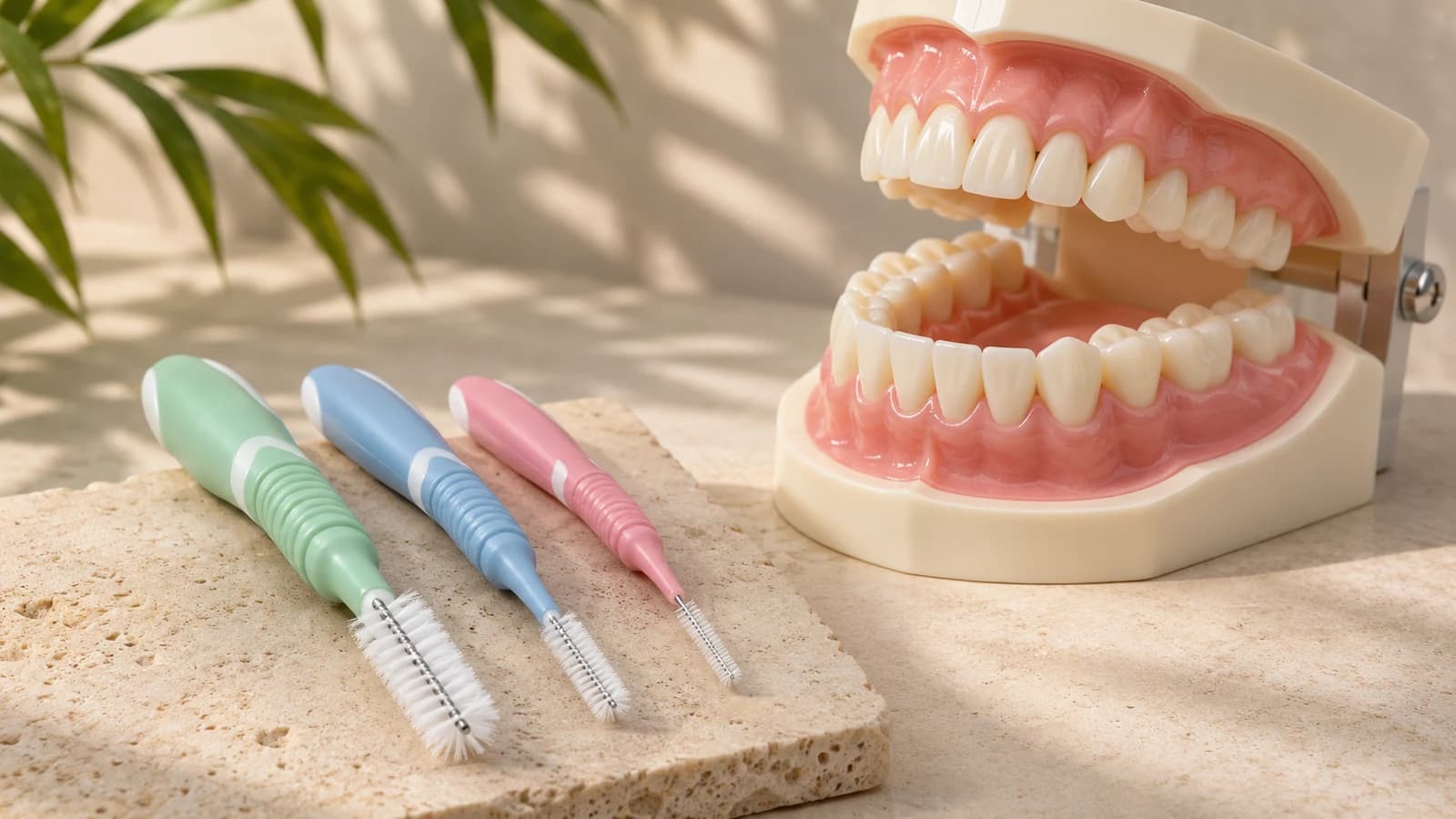
Wire passes through without force. Different gaps can need different sizes, and very tight spaces may be easier to clean with floss.
If a brush sticks, slips through without touching anything or makes one spot sore, start by checking the fit. This guide walks you through choosing a size, cleaning the back teeth and working around braces or dental work.
How to Choose the Right Interdental Brush Size
Look at the space close to the gumline, just below the point where two teeth meet. That’s where a brush may fit even when the teeth touch above it. Start with a small size and try it gently. You should feel the bristles touch the sides of the gap while the wire moves through smoothly.
- If the brush slides through and the bristles barely touch either tooth, try a slightly larger size.
- If the wire bends, rubs against a tooth or needs a push to pass through, try a smaller brush or check your angle.
- If even the smallest brush will not pass comfortably, use floss for that contact or ask your dentist to check what fits.
You might use one size between the front teeth and another behind a molar. Note the sizes that work for each area, especially before replacing the pack. Colours can mean different sizes across brands, so check the size printed on the packet when you switch.
If the same two teeth feel tight from the front but the brush lines up from the cheek side, the angle may be the issue. A dentist or hygienist can check the fit before you buy a bigger pack.
How to Use an Interdental Brush
Practise in front of a mirror with good light. Hold the handle close enough to the brush head to guide it with a light grip. If you find yourself pushing with your whole hand, pause and reset your position.
- Start with a gap you can see clearly. Line the brush up with the opening near the gumline, with the bristles pointing into the gap.
- Slide the brush through gently. If the angle is awkward, pull back and reposition it rather than pushing against the tooth or gum.
- Draw the brush back out along the same path. Keep the movement controlled so the bristles clean the tooth surfaces without scraping the gum.
- Rinse away debris before moving to the next gap. After you finish, rinse the brush and follow the pack’s instructions for storage and replacement.
For back teeth, a longer handle or an angled head can make it easier to line up the brush. Try opening your mouth just enough to reach the spot without stretching your cheek tight. If you still can’t see where the brush is going, ask your dentist or hygienist to show you the angle.
Cleaning Around Braces, Bridges and Implants
Around fixed braces, a small brush can help reach the sides of brackets and the space beneath the wire. The angle you use around the bracket will be different from the angle you use between two teeth. Start where the brush moves freely and let the bristles do the work. If the wire of the brush catches on the appliance, take it out and approach from a different direction.
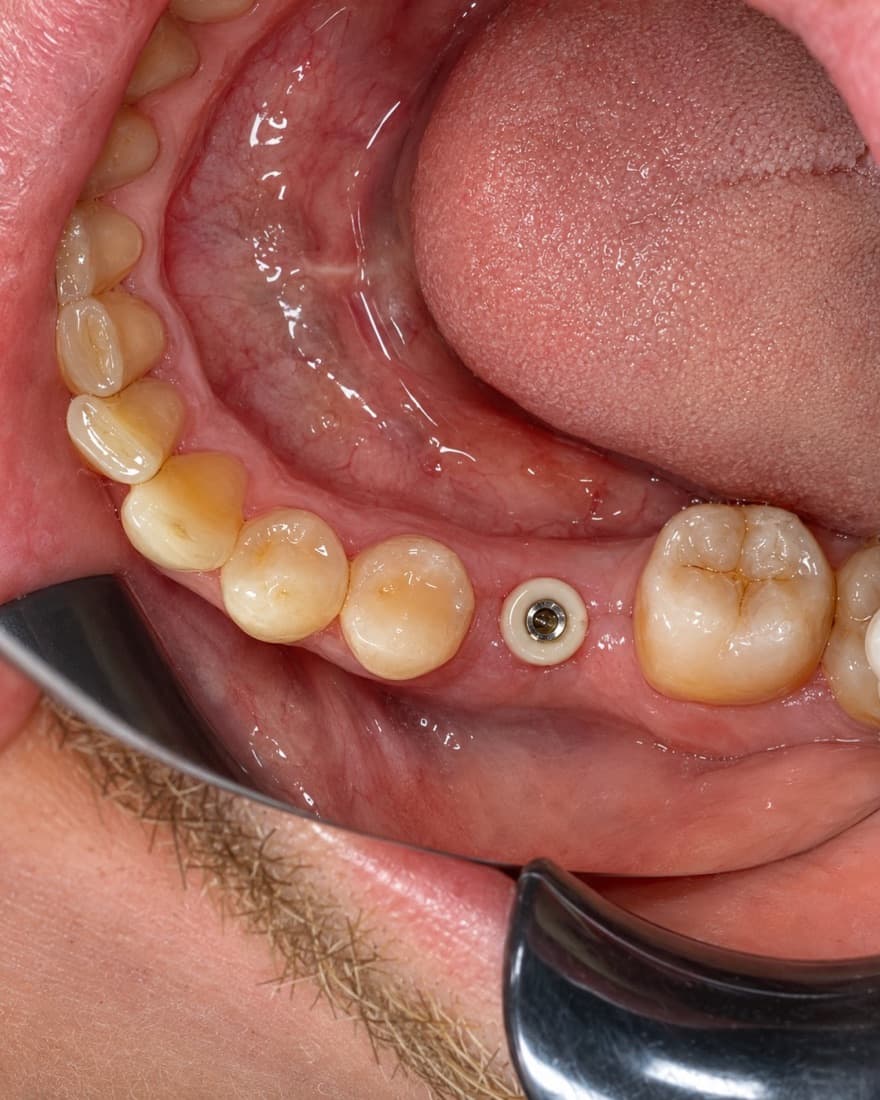
A bridge can leave an area under the replacement tooth that’s hard to reach from above. A brush may fit in an open space, while other areas may need a floss threader or another tool. Implant restorations also vary in shape. Ask which size and brush type suit the area around your implant, especially if you’re trying to reach under a wider restoration.
Bring the brush you actually use to a check-up. Showing exactly where it catches is more helpful than describing it as too large for your whole mouth.
Make It Part of Your Daily Routine
Clean between your teeth daily as part of your usual brushing routine. Start in the same place each time so you’re less likely to forget a back tooth. If you need more than one size, keep them together and use each one for the same group of gaps. A small travel pouch can help keep the handles and caps together when you’re away.
Check the brush head as you use it. If the bristles are worn or the wire is bent out of shape, replace it according to the pack instructions. If the wire bends on the first pass every time, try a different angle or get the fit checked before buying more of that size.
An interdental brush can remove soft plaque and food. Hard dental tartar is a different problem and needs professional cleaning. If a rough deposit remains after gentle cleaning, a professional teeth cleaning can address buildup you can’t remove at home.
When Should You See a Dentist?
A little bleeding can come from irritated gums or a brush that’s being pushed too hard. If one gap hurts as soon as you try the brush, stop forcing it and check the size and direction. Where it fits comfortably, keep cleaning gently. Note whether the bleeding happens in several places or keeps returning at the same spot.
Arrange a dental check if bleeding continues with gentle daily care, or if you notice swollen or tender gums or persistent pain. A dentist can assess the gums and check whether a rough surface, dental work or the shape of the gap is making it harder to clean. Bring the handle and the pack if you have them so the dentist can see the size you’ve been using.
Get the Fit Right for the Gaps You Miss
If you’re unsure which size fits, bring your brushes and ask for a quick demonstration on the areas you find awkward. FLOSS Dental Studio is in Kerobokan, Kuta Utara. See Dentist Bali for clinic details, or read Dentist Kuta and Dentist Canggu if you’re planning a visit from either area.