Side Effects of Dental Veneers and How to Reduce the Risks
Understand veneers side effects, normal adjustment, warning signs and practical ways to reduce risks before and after treatment.
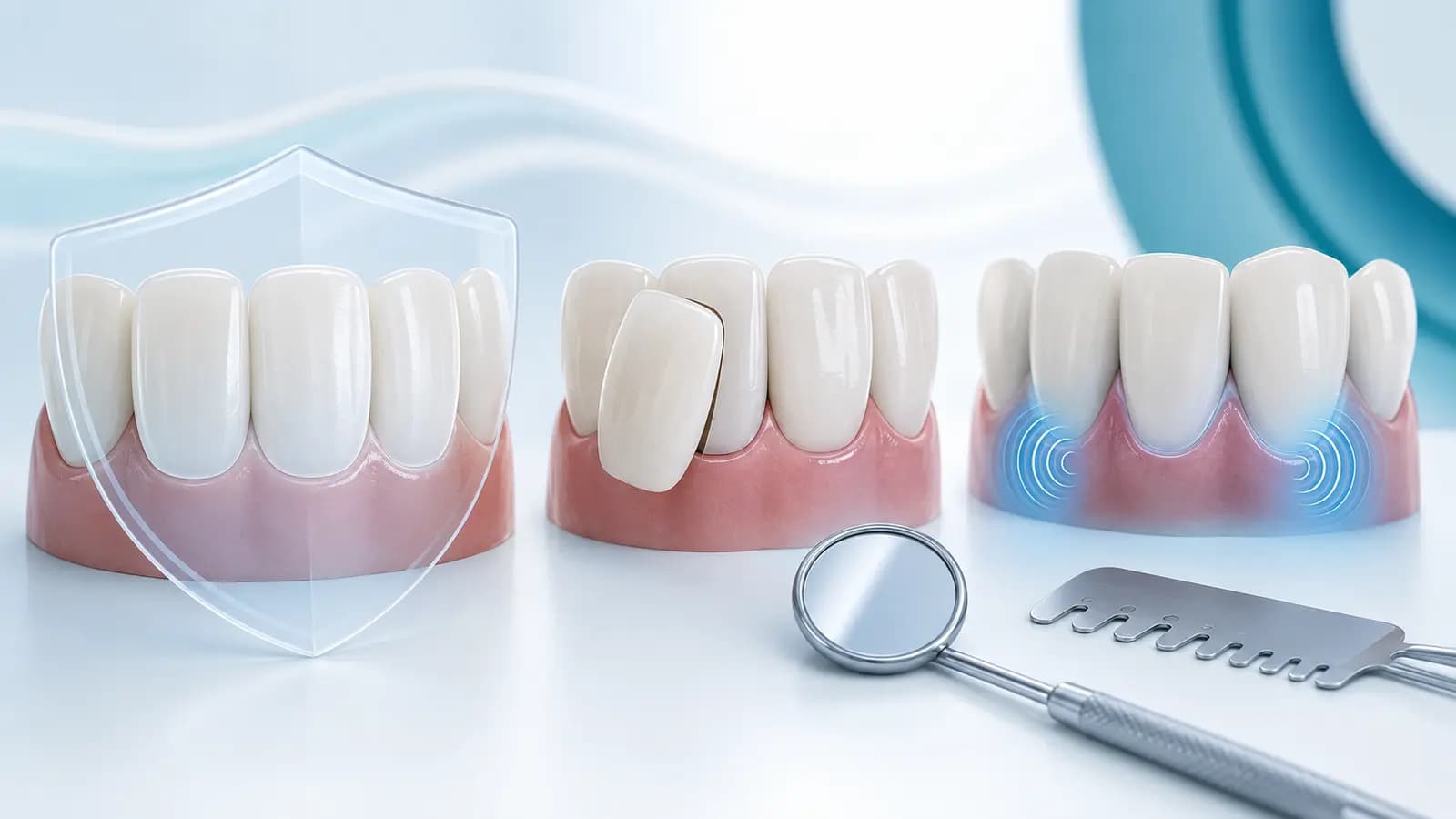
Veneers side effects can include tooth sensitivity, irritated gums, an uncomfortable bite, and a veneer that chips or comes loose. Mild symptoms can occur while your mouth adjusts, but worsening pain, persistent bleeding or movement in a veneer should not be treated as something you simply have to tolerate.
The material is only one part of the risk. Your oral health before treatment, the amount of enamel preparation, the fit at the gumline, your bite and teeth-grinding habits all matter.
Normal Adjustment or a Sign of a Problem?
A mild, unfamiliar feeling should gradually settle. A problem that persists, becomes stronger or interferes with eating deserves a review.
| What you notice | May occur during adjustment | Arrange a dental review |
|---|---|---|
| Sensitivity | Mild response to hot or cold that improves | Sharp, spontaneous or worsening pain |
| Gums | Minor tenderness after placement | Ongoing swelling, bleeding, pain or odour |
| Bite | The new shape feels unfamiliar | One tooth hits first, chewing is difficult or your jaw aches |
| Veneer | The surface feels different but stable | Movement, a crack, a sharp edge or complete debonding |
Seven Side Effects of Veneers and Long-Term Trade-Offs
1. Tooth sensitivity
Some veneer techniques require a small amount of enamel to be removed so the restoration does not look bulky and can bond correctly. The tooth may then respond more strongly to heat, cold, sweet foods or pressure. Mild sensitivity may settle, but persistent pain needs an assessment of the bite, veneer margins and the tooth itself.
2. Gum irritation or bleeding
Gums sometimes feel tender while adapting. Continued inflammation is more likely when a margin is bulky, extends too far under the gum, retains excess cement or makes cleaning between teeth difficult. Redness, swelling, bleeding or an unpleasant smell should be investigated rather than covered up with mouthwash.
3. A high bite and jaw discomfort
A very small change to a tooth surface can alter where your teeth meet. If one veneer contacts first, the tooth can feel overloaded and the jaw muscles may compensate. A dentist can check the contact points and make a controlled adjustment; waiting indefinitely for a clearly high bite to “wear in” is not a good plan.
4. Chipping, cracking or debonding
Veneers are designed for normal function, but they are not indestructible. Ice, using teeth to open packaging, trauma, clenching and grinding can place excessive force on them. Do not glue a loose veneer back yourself. The tooth, bonding surface and bite need to be checked before it is repaired or replaced.
5. Shade mismatch or visible margins
A bonded veneer cannot be whitened in the same way as a natural tooth. Over time, neighbouring teeth may change colour and create a contrast. If gums recede, an edge may also become visible. Shade planning, whitening and the position of the veneer margin should therefore be discussed before final bonding.
6. Decay can still occur around a veneer
A veneer covers the front of a tooth; it does not make the entire tooth resistant to plaque or decay. A cavity can develop at an exposed surface or margin, particularly when cleaning is difficult or the fit is poor. Persistent odour, an unpleasant taste or floss that repeatedly catches in one place are reasonable reasons to book a check.
7. The change may be irreversible
This is a long-term commitment rather than an immediate side effect. Once enamel has been removed, the tooth will usually continue to need a veneer or another restoration when the existing one eventually requires replacement. Understanding that commitment is part of informed consent, alongside learning about the different cosmetic and restorative treatments chosen in Bali.
Who Has a Higher Risk of Veneer Problems?
Veneers should not be used to hide active disease. Untreated decay, gum disease or poor plaque control should be managed first. A heavily damaged tooth may also need a restoration that protects more than its front surface.
Grinding, a heavy bite, severe crowding and limited healthy enamel all require careful assessment. The safer recommendation might include a night guard, orthodontics, bonding, whitening, a crown or no cosmetic treatment at all. If you are travelling for care, use the guide to checking dental safety in Bali to evaluate the clinic and proposed plan, not just the before-and-after photos.
How to Reduce the Risks and Disadvantages of Veneers
- Begin with a complete examination. Teeth, gums, enamel, bite and grinding habits should be assessed before cosmetic details.
- Compare conservative alternatives. Whitening may address colour, bonding a small defect and orthodontics tooth position. Veneers are not the automatic solution to every cosmetic concern.
- Agree on shape and shade before permanent bonding. Photographs, Digital Smile Design or a mock-up can make expectations easier to discuss.
- Check the margins, contact points and bite. You should be able to clean between the teeth, and no veneer should feel as if it contacts first.
- Protect the result without testing its limits. Brush gently, clean between teeth, avoid using teeth as tools and wear a night guard if prescribed.
International patients should leave time for a review instead of scheduling the final appointment immediately before departure. The article on how long to stay in Bali for dental treatment explains why a buffer for bite checks and small adjustments can matter.
Signs of Veneer Failure That Need Attention
Contact a dentist if a veneer moves, cracks or develops a sharp edge; your bite suddenly changes; pain keeps worsening; or the nearby gum remains swollen and bleeds. An odour that repeatedly comes from one area also needs a cause, not simply stronger mouthwash. Seek urgent care for major facial swelling, fever or difficulty swallowing.
Do not remove, file or rebond a veneer at home. A dentist needs to establish whether the problem is the veneer, cement, underlying tooth, gum or bite. If replacement is being discussed, the guide to veneers cost in Bali can help you ask what the quote includes.
Make a Veneer Decision with Clear Expectations
The side effects of veneers should neither be exaggerated nor hidden. A thorough examination, conservative preparation, clear shade and shape planning, and a proper review after placement can reduce avoidable problems. The right decision protects tooth health while meeting a realistic cosmetic goal.
If you want thoughtful dental care, start by discussing both the benefits and risks. A search for “dentist Bali” offers many choices; at Floss Dental, you can review your oral health, conservative alternatives and the trade-offs of each plan before committing.
FAQ About Veneers Side Effects
What are the disadvantages of veneers?
The main disadvantages of veneers include the possible removal of enamel, sensitivity, future maintenance or replacement, chipping or debonding, and a shade that cannot be whitened after bonding. Suitability and risk vary from one person to another.
Why do dentists advise against veneers?
A dentist may advise against veneers when there is untreated decay or gum disease, too little healthy enamel, heavy grinding, a bite problem, severe tooth damage or a more conservative option that can achieve the goal with less alteration.