Root Canal Treatment: When Is It Needed?
Root canal treatment is used to save a tooth when its pulp, often called the tooth nerve, has become inflamed or infected. Instead of removing the tooth,…
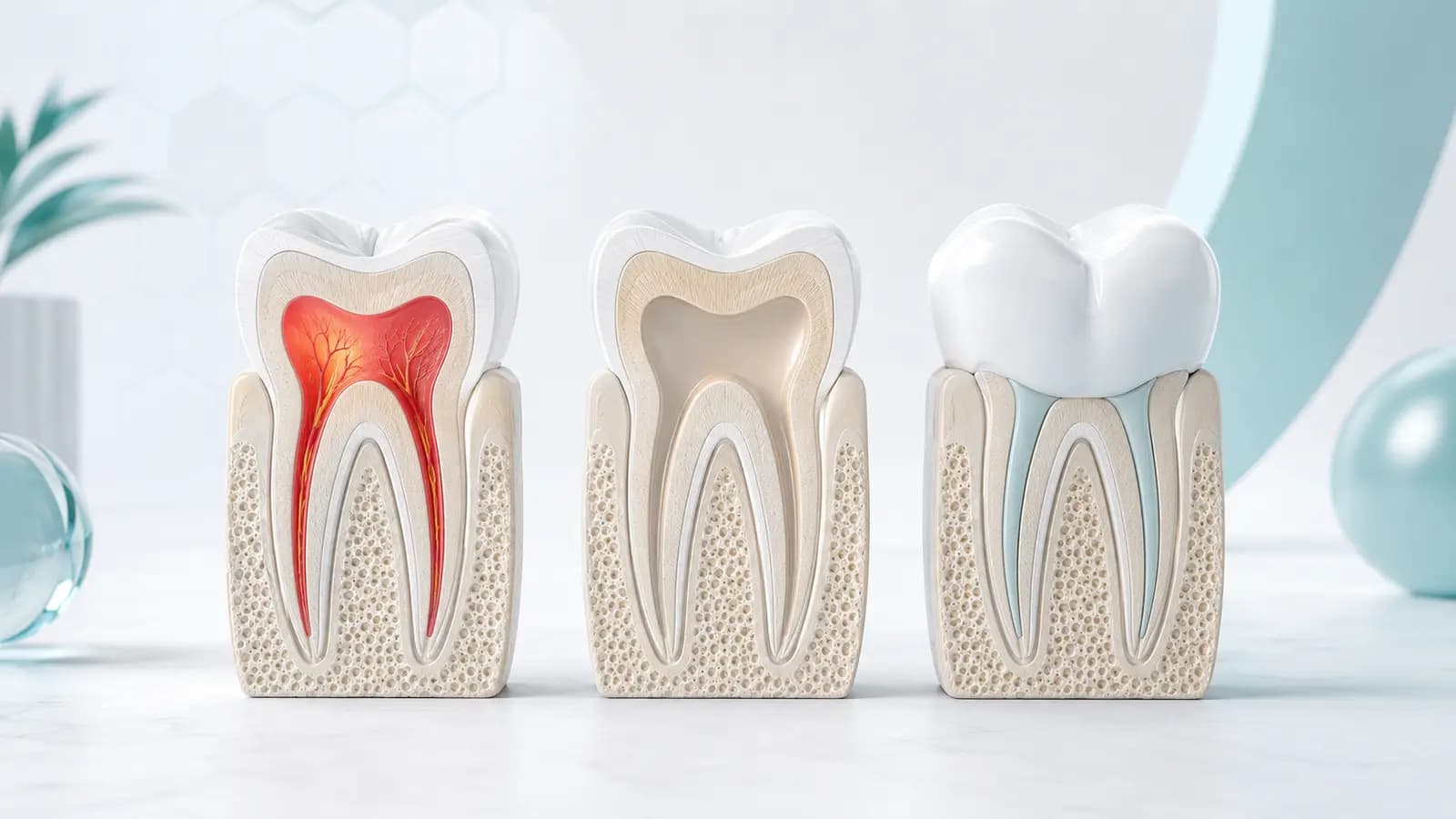
The dentist cleans the affected tissue from the root canals, disinfects the space, and seals it.
Pulp damage is not always visible from the outside. Deep decay, a crack, a leaking restoration, or an old injury may affect the inside of a tooth. A clinical examination and dental X-rays are therefore important for an accurate diagnosis.
What Is Root Canal Treatment?
The pulp sits at the centre of a tooth and contains nerves and blood vessels. When bacteria reach it, the tissue can become irreversibly inflamed or die. Root canal treatment removes the damaged pulp, cleans and shapes the canals inside the roots, and fills them to reduce the risk of reinfection.
Signs a Root Canal May Be Needed
1. Severe or Throbbing Tooth Pain
Spontaneous pain, pain that disturbs sleep, or discomfort that continues after a trigger has gone may indicate pulp inflammation. Pain intensity alone, however, cannot confirm the diagnosis.
2. Lingering Heat or Cold Sensitivity
Brief sensitivity is common, but pain that lingers after a hot or cold drink has been removed should be assessed.
3. Swelling or a Gum Pimple
Infection around a root may cause swelling, a bad taste, tenderness, or a small pimple on the gum that occasionally drains.
4. Tooth Discolouration After Trauma
An impact can damage the pulp even when a tooth has not visibly fractured. A tooth that becomes noticeably darker after an injury needs professional evaluation.
5. Deep Decay or a Crack
Advanced decay, a leaking large filling, or a crack can allow bacteria to enter the pulp. Root canal treatment may be needed before the tooth receives its final restoration.
How Root Canal Treatment Is Performed
Examination and Diagnosis
The dentist reviews the symptoms, tests the tooth, checks the surrounding tissues, and may use X-rays to examine the roots and nearby bone.
Cleaning the Canals
After local anaesthetic, an opening is made in the tooth. The affected pulp is removed, and the canals are cleaned, shaped, and disinfected. Complex teeth may require more than one appointment.
Filling and Sealing
The cleaned canals are filled and sealed. A temporary filling may be placed between visits before the definitive restoration is completed.
Final Restoration
A tooth that has lost substantial structure may need a dental crown to protect it during biting and chewing.
Aftercare Following a Root Canal
Mild soreness or sensitivity can occur for a few days. Avoid hard chewing on a tooth with a temporary filling, take medicine only as directed, maintain oral hygiene, and attend every review. Contact the clinic if pain or swelling becomes worse.
Preserve Your Natural Tooth at Floss Dental Studio
Root canal treatment may preserve a tooth with an infected pulp, but it should only be recommended after a proper diagnosis. If you develop tooth pain, swelling, or possible nerve symptoms while in Bali, book an examination at Floss Dental Studio for an appropriate treatment plan.