Root Canal Treatment in Kuta: Symptoms, Procedure, and Recovery
Root canal treatment removes inflamed or infected pulp tissue, cleans and shapes the canals, and seals the space so the natural tooth can be retained. For
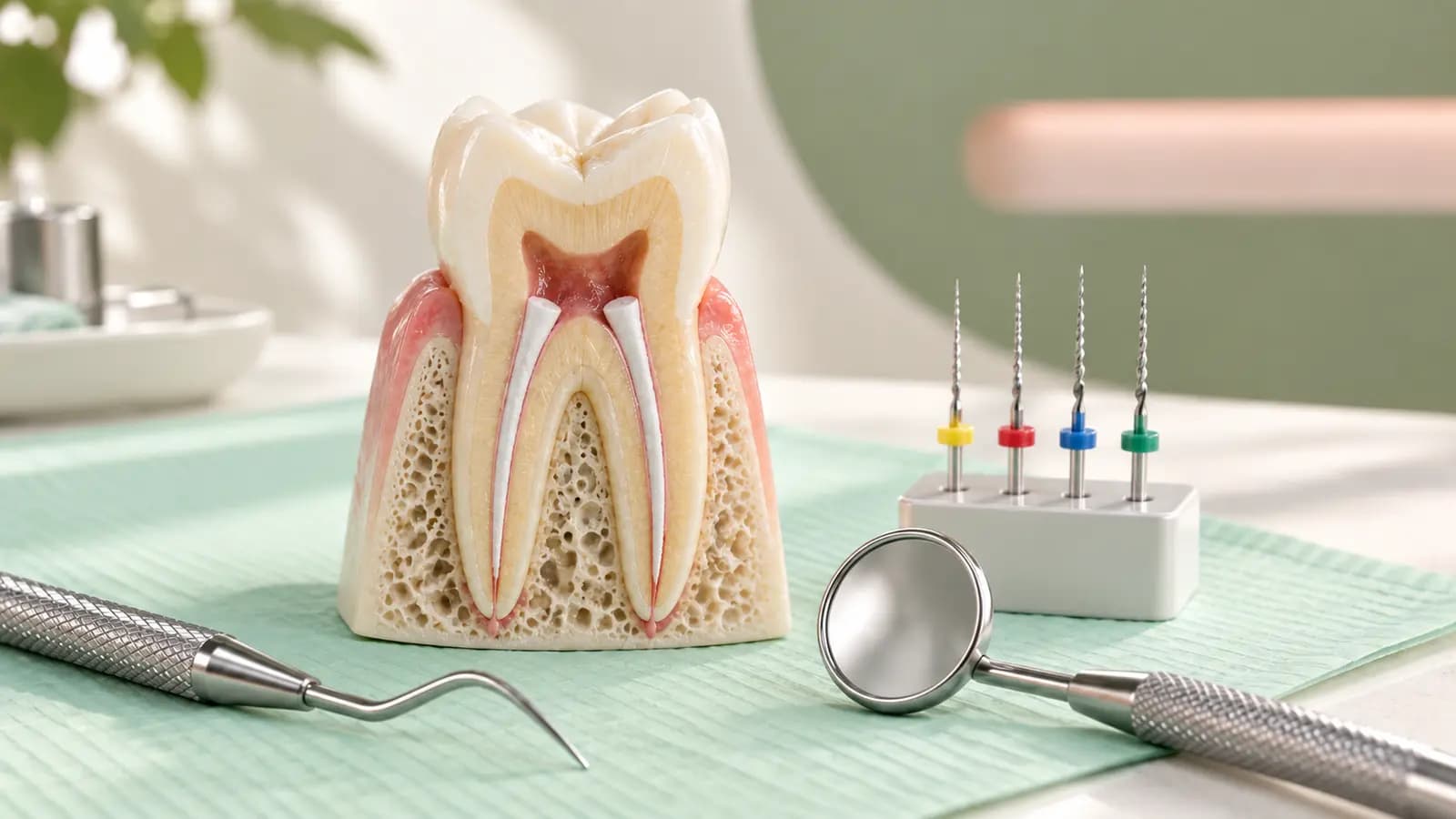
Patients looking for root canal kuta, FLOSS Dental Studio lists IDR 2,000,000–IDR 3,500,000 with a general dentist and IDR 3,250,000–IDR 5,500,000 with an endodontic specialist. Examination and X-rays determine complexity, visit number, and the final restoration.
When Does a Tooth Need Root Canal Treatment?
The pulp inside a tooth contains nerves and blood vessels. Deep decay, cracks, trauma, or repeated dental procedures can cause inflammation or infection. Symptoms may include sharp pain when biting, sensitivity to heat or cold that lingers, gum swelling, a pimple-like bump on the gum, tooth darkening, or an unpleasant taste from the area.
Not every tooth needing root canal treatment kuta is painful. A badly damaged nerve can stop producing symptoms temporarily even though infection remains. Conversely, sensitivity does not automatically mean the pulp must be removed. Diagnosis combines symptom history, examination, pulp tests, percussion, and imaging while also checking whether the tooth can still be restored.
Signs That Need Faster Assessment
- Swelling of the gum or face, fever, pus, or difficulty opening the mouth.
- Throbbing pain that disrupts sleep or continues to worsen.
- A cracked tooth after trauma or severe pain when biting.
- A lost filling or crown on a tooth previously treated with a root canal.
Difficulty swallowing or breathing, rapidly spreading swelling, or severe general illness requires emergency medical attention. These symptoms should not wait for a routine dental slot.
Root Canal Fees at FLOSS
The following prices are guides. Tooth type, canal number, root anatomy, infection, previous treatment, and the restoration needed afterwards can change the total.
A periapical X-ray package for root canal care is listed at IDR 400,000, a temporary filling at IDR 150,000, and emergency endodontic treatment at IDR 300,000. A permanent filling, onlay, or crown may be charged separately. Ask for the whole sequence, not only the canal procedure, when reviewing the estimate.
The Root Canal Procedure
- The dentist evaluates symptoms, gums, tooth restorability, and X-rays, then explains preservation versus extraction.
- Local anaesthetic numbs the area, and the tooth is isolated from saliva to keep the working field clean.
- A small access opening is made. Inflamed or infected pulp is removed, and the canals are cleaned and shaped.
- The canal system is disinfected and sealed. Some cases require medication and a temporary filling between visits.
- After canal treatment, the tooth receives a permanent restoration or is prepared for a crown to protect the remaining structure.
Some cases finish in one or two visits, while complex infection, difficult anatomy, or retreatment can take longer. FLOSS lists 60–120 minutes per main appointment. Pain relief does not mean the process is complete; the final restoration and review are important for long-term protection.
Does Root Canal Treatment Hurt?
With effective local anaesthesia, patients commonly feel pressure or vibration rather than sharp pain during the procedure. The purpose of treatment is to remove the source of inflammation and infection. Mild tenderness or discomfort when biting can occur for several days while tissues around the root recover.
No procedure has a guaranteed result. Very small additional canals, a root fracture, leakage around a restoration, or new infection may lead to retreatment or another intervention. A well-sealed final restoration, good oral hygiene, and follow-up improve the outlook.
Recovery After Treatment
- Wait until numbness has worn off before eating to avoid biting your cheek or tongue.
- Choose softer foods and avoid heavy chewing on a tooth with a temporary filling.
- Brush and clean between teeth normally but be gentle near a sensitive area.
- Take medicine only as prescribed or directed; do not change the dose yourself.
- Call the clinic for persistent severe pain, new swelling, a high bite, a lost temporary filling, or returning symptoms.
Planning Treatment During a Kuta Holiday
For tooth infection treatment kuta while travelling, tell the clinic your departure date and flight plans. The schedule needs room for diagnosis, one or more treatment sessions, the final restoration, and review. When time is insufficient, the dentist may discuss safe stabilisation and provide records for continued care elsewhere.
FLOSS Dental Studio is at Geo Open Space, Jalan Raya Kedampang No. 7X, Kerobokan, North Kuta, rather than central Kuta. Confirm the appointment before travelling and bring details of allergies, medicines, medical conditions, and previous X-rays if available.
Preserve the Tooth Before Infection Spreads
Timely diagnosis can protect the natural tooth and prevent a manageable problem from becoming more complex. For considered dental care, consult a dentist Bali visitors can reach at Floss Dental to learn whether the tooth can be saved, who should treat it, and which final restoration is required.
FAQ About Root Canal Treatment in Kuta
How much does root canal treatment cost?
FLOSS lists IDR 2,000,000–IDR 3,500,000 with a general dentist, IDR 3,250,000–IDR 5,500,000 with a specialist, and IDR 4,250,000–IDR 6,500,000 for specialist retreatment. Imaging and the final restoration may be separate.
What are the stages of a root canal?
The usual stages are diagnosis and imaging, anaesthesia and isolation, access, canal cleaning and shaping, disinfection, filling the canals, and restoring the tooth. Visit number depends on infection, anatomy, and tissue response.
What side effects can occur?
Temporary tenderness or bite sensitivity is common. Less common problems include persistent infection, fracture, or restoration leakage. Contact the dentist for worsening pain, swelling, a medicine reaction, a lost filling, or an uneven bite.
Can a tooth need treatment without hurting?
Yes. A damaged or dead pulp may stop producing pain even though infection persists. Examination, pulp testing, and X-rays are needed because symptoms alone cannot confirm the diagnosis.