Tooth Erosion in Seminyak: How It Differs from Cavities and How It Is Managed
Dental erosion is loss of hard tooth tissue caused by acids that do not originate from bacterial activity. Acidic food and drinks, reflux, or repeated vomiting can contribute. Unlike cavities, erosion does not require bacteria to produce the damaging acid. An erosion assessment in Seminyak considers the wear pattern and exposure sources before treatment is […]
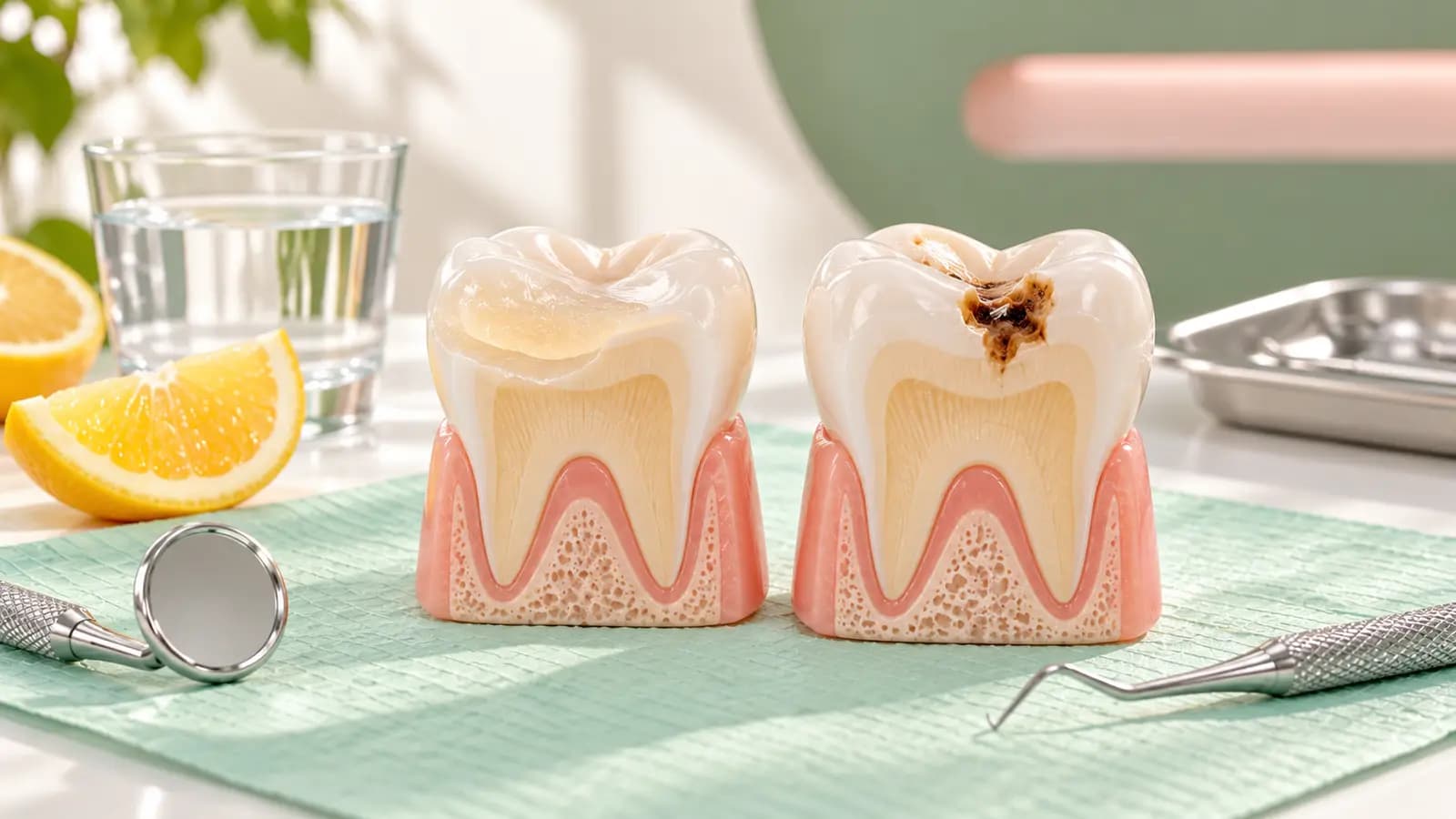
Dental erosion is loss of hard tooth tissue caused by acids that do not originate from bacterial activity. Acidic food and drinks, reflux, or repeated vomiting can contribute. Unlike cavities, erosion does not require bacteria to produce the damaging acid. An erosion assessment in Seminyak considers the wear pattern and exposure sources before treatment is planned.
Lost enamel does not grow back like skin. However, contributing factors can be managed, sensitivity can be treated, and selected areas can be restored where needed. Preventing further damage is an important part of the plan.
Erosion, decay, abrasion, and attrition compared
| Condition | Main process | Relevant assessment |
|---|---|---|
| Erosion | Dietary or bodily acids directly affect tooth tissue | Drink habits, reflux, and vomiting |
| Cavities / decay | Plaque bacteria produce acids from sugars | Plaque, sugar frequency, and tooth damage |
| Abrasion | Mechanical wear other than direct tooth contact | Brushing technique and related habits |
| Attrition | Wear through tooth-to-tooth contact | Bite, clenching, or grinding |
Several processes can affect the same tooth. Acid exposure may make a surface more vulnerable to mechanical wear. The assessment therefore considers habits and the bite together rather than attributing every worn tooth to one cause.
Signs that enamel may be wearing away
Possible changes include smoother or hollowed surfaces, thinning edges, altered tooth shape, or a more yellow appearance as the layer beneath enamel becomes more visible. Sensitivity to cold, heat, or particular foods may also occur.
These findings are not specific to erosion. Sensitivity can also arise from decay, recession, cracks, or restoration problems. An examination distinguishes mild wear that can be monitored from damage that needs treatment.
Acid exposure to review
Food and drinks
Soft drinks, some sports drinks, juice, and acidic foods can contribute. Sugar-free products may still be acidic. Frequency, contact time, and holding or swishing a drink around the mouth all affect exposure.
Nutritious acidic foods do not necessarily need to be removed entirely from the diet. Discuss a safer pattern, such as consuming them with a meal instead of creating repeated exposure throughout the day. Water is a useful choice between meals.
Reflux and repeated vomiting
Stomach acid reaching the mouth can contribute to erosion. Mention reflux, an acidic taste, or vomiting, including symptoms related to pregnancy or other conditions. The dentist may recommend coordination with a doctor to assess a medical cause.
Toothpaste is not a treatment for the underlying reflux. Dental care helps protect remaining tissue, while acid exposure originating within the body needs appropriate wider management.
What the consultation considers
- The pattern and location of tissue loss, sensitivity, and existing fillings.
- Food and drink habits, including how often and how acidic drinks are consumed.
- Reflux, vomiting, dry mouth, medicines, and medical history.
- The bite and possible grinding habits.
- Photographs, scans, or other baseline records when useful for monitoring change.
A few days of notes about drinks, snacks, and symptom timing can help. Product names and how they are consumed are useful details. Not every case requires X-rays; further investigations follow the clinical findings.
Reduce exposure and protect the remaining enamel
- Reduce frequent acidic drinks and prolonged sipping.
- Avoid holding or swishing acidic drinks in your mouth.
- Rinse with water after acid exposure or vomiting. Avoid brushing immediately and discuss a suitable delay for your routine.
- Brush twice daily with a soft brush and fluoride toothpaste without excessive pressure.
- Seek assessment for reflux, repeated vomiting, or dry mouth so contributing causes are addressed.
Products for sensitivity or erosion protection may be considered according to your findings. Do not rely on a claim that toothpaste will regrow all lost enamel. Supporting surface remineralisation is different from replacing tooth tissue that has already worn away.
When is restoration needed?
Minor, stable wear without significant problems may be monitored while causes are managed. Sensitivity, altered shape, functional difficulty, or more extensive tissue loss may lead the dentist to consider composite restorations, onlays, or crowns.
A restoration does not remove the acid source. Exposure management and hygiene remain necessary to support the result. Extensive care may require several stages and reviews of the bite and restorations.
Spontaneous pain, swelling, or worsening symptoms should be reviewed sooner because another problem may be present. Pain in a worn tooth should not automatically be assumed to be enamel sensitivity.
Monitor change as well as discomfort
Reviews allow comparison of tooth shape and assessment of ongoing progression. Reduced sensitivity after changing toothpaste does not necessarily show that wear has stopped. Follow the recommended schedule and keep track of the habits you have changed.
Before the appointment ends, agree which exposures to address first and how progress will be reviewed. Specific changes are easier to maintain than treating every food or drink as equally risky.
Identify acid sources and protect your teeth
Arrange an examination if your teeth become more sensitive, thinner, or change shape. Discuss dental care with a dentist Bali patients can consult at Floss Dental to assess erosion, contributing factors, and appropriate protection or restoration.
FAQ About Tooth Erosion
How is tooth erosion managed?
Care begins by identifying acid sources, reducing exposure, and establishing appropriate cleaning habits. The dentist assesses fluoride protection, sensitivity management, and any need for restoration.
Can worn teeth be repaired?
Missing tissue can be restored in suitable cases, but lost natural enamel does not regrow. The options depend on damage extent and tooth function.
Is erosion the same as a cavity?
No. Erosion involves non-bacterial acid exposure, while decay involves acids produced by plaque bacteria. Both can occur together and need appropriate assessment.