Swollen Gums Around a Dental Implant in Bali: Understanding Peri-Implantitis
Swelling around an implant should be checked, particularly when there is bleeding, pus, or a persistent unpleasant taste. Peri-implant disease is one possibility. Peri-implantitis involves inflammation and loss of supporting bone, but swelling alone cannot confirm it. An implant assessment in Bali can identify whether the problem involves the gum, bone, or restoration components.If symptoms […]
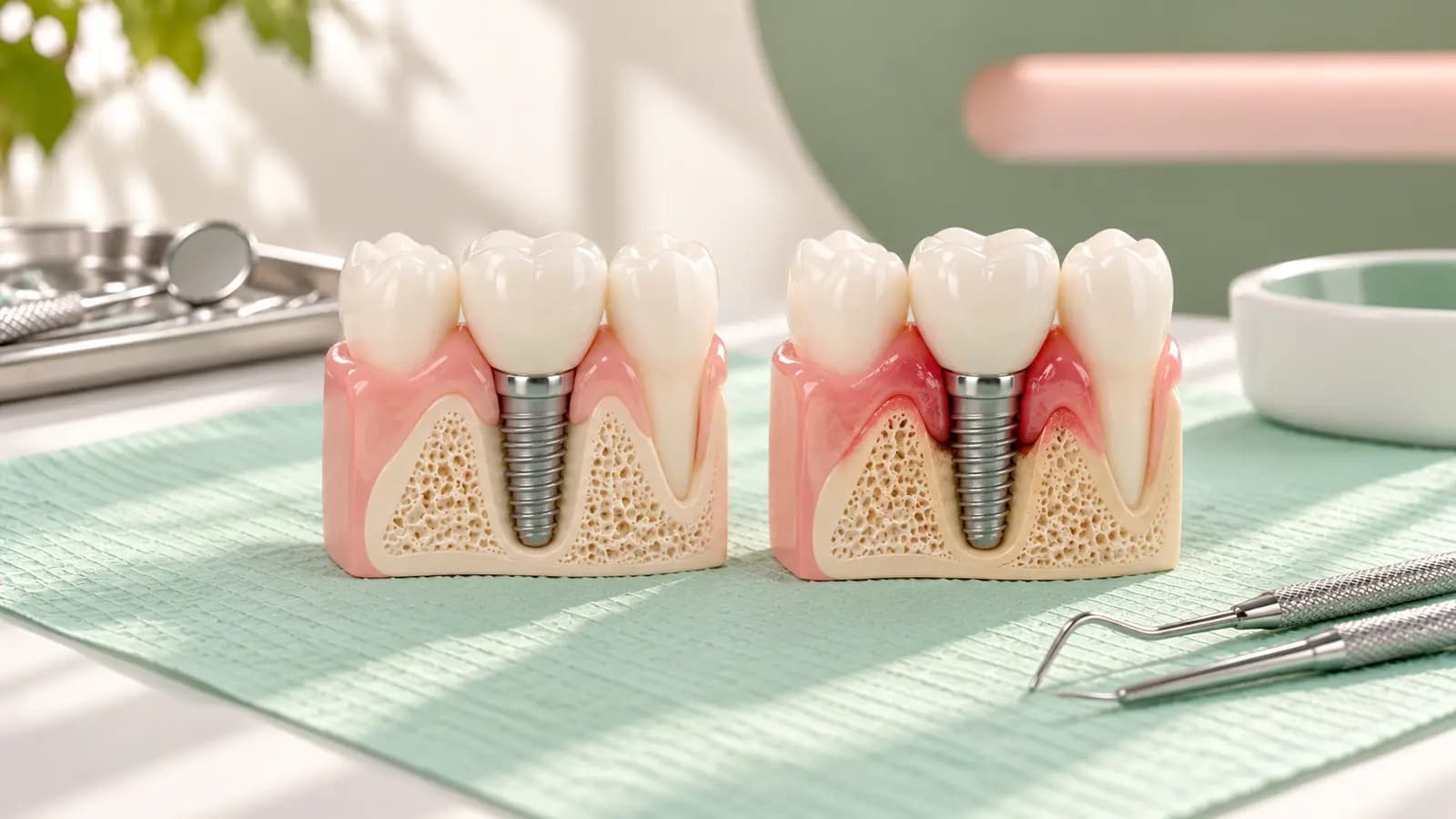
Swelling around an implant should be checked, particularly when there is bleeding, pus, or a persistent unpleasant taste. Peri-implant disease is one possibility. Peri-implantitis involves inflammation and loss of supporting bone, but swelling alone cannot confirm it. An implant assessment in Bali can identify whether the problem involves the gum, bone, or restoration components.
If symptoms occur soon after surgery, explain when treatment took place and how they are changing. Healing-stage symptoms need a different assessment from a problem around a long-established implant. New swelling should not automatically be labelled normal healing or implant failure.
Mucositis and peri-implantitis are different conditions
| Condition | Structures involved | Treatment implications |
|---|---|---|
| Peri-implant mucositis | Soft-tissue inflammation without disease-related bone loss | Often manageable with plaque control, treatment, and review |
| Peri-implantitis | Inflammation with progressive loss of supporting bone | Requires a plan based on disease extent and response |
| Restoration-component problem | A crown, screw, or connection may be affected | Must be distinguished from movement of the implant in bone |
Gum colour alone cannot establish the difference. The dentist combines tissue findings, restoration assessment, and imaging when needed. Baseline records are useful for evaluating bone changes over time.
Changes to watch for
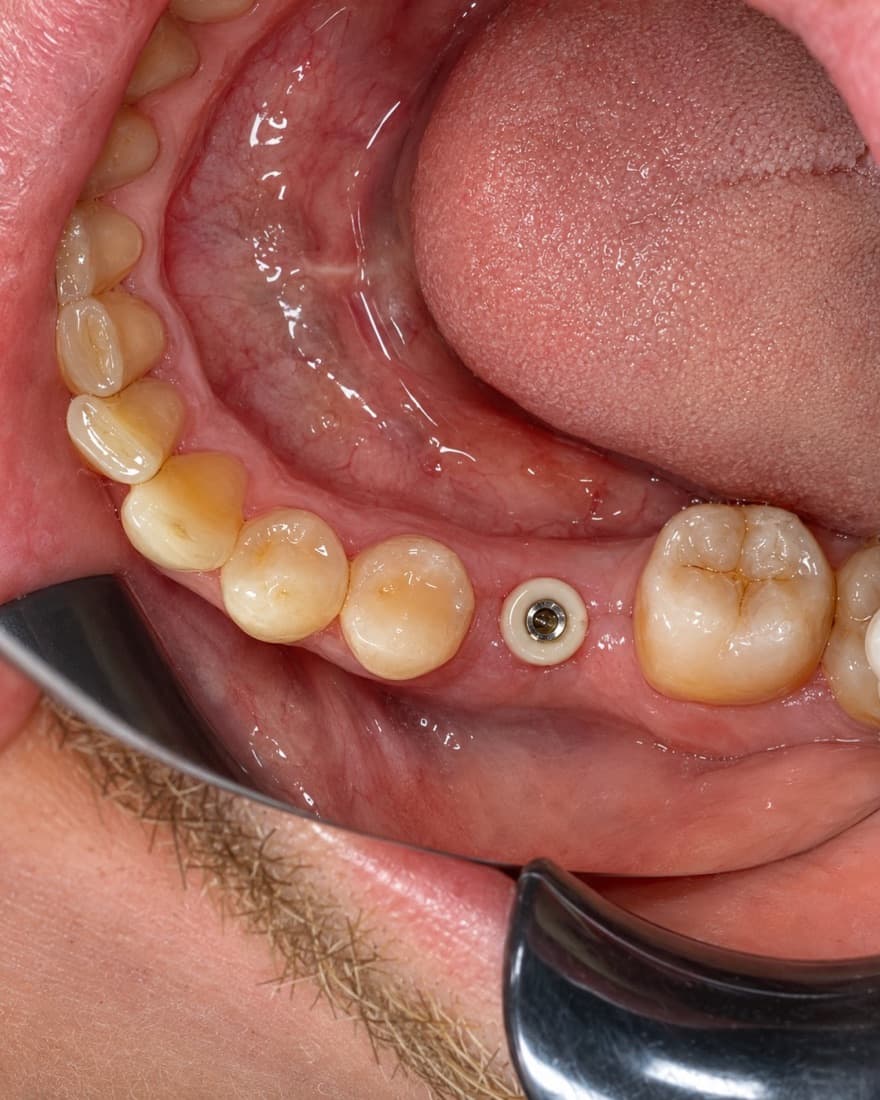
The gum may look red or swollen and bleed during cleaning. Pus, an unpleasant smell or taste, recession, and a change in biting comfort also deserve attention. Significant pain is not always present early in the disease.
If the crown feels loose, avoid repeatedly testing it by moving it. A loose component and loss of implant stability require different management. Avoid chewing on the area and contact the clinic.
Why peri-implant disease can develop
Plaque around an implant plays an important role in inflammation. Previous periodontitis, difficulty maintaining hygiene, smoking, poorly controlled diabetes, and irregular maintenance are relevant factors to discuss.
Local factors such as restoration shape and access for cleaning can also influence care. A problem should not simply be reduced to a brushing mistake. The dentist assesses what is preventing effective hygiene and healthy tissues.
What the examination includes
- Symptom duration, placement date, treatment history, and previous gum disease.
- Plaque, bleeding, pus, and tissue changes around the implant.
- Measurements around the implant, compared with earlier findings where available.
- Crown stability, connections, and the bite.
- Imaging when needed to assess supporting bone and meaningful changes.
Bring implant-system details, surgical notes, and previous X-rays if available, particularly when placement was performed elsewhere. Without baseline data, assessment can still be made using appropriate clinical criteria.
Treatment and reassessment
Care may begin with tailored hygiene advice, risk-factor management, and professional cleaning using implant-appropriate methods. A restoration that obstructs access may need evaluation. The response is then reviewed.
For an implant considered treatable, non-surgical therapy may be the initial stage of peri-implantitis management. If it does not achieve sufficient control, surgery may be considered to improve access or manage the bone defect. The suitability of regenerative treatment depends on the defect and clinical assessment.
Some severely affected implants may be unsuitable for retention. Removal decisions take prognosis, tissue condition, and replacement options into account. No single procedure guarantees the same outcome for every patient.
What to do while arranging care
- Continue gentle cleaning with the technique you have been taught, provided it is appropriate to your condition and healing stage.
- Do not probe the gum, squeeze pus, or attempt to remove components.
- Avoid leftover antibiotics and do not use mouthwash as a substitute for an examination.
- Record changes and contact the clinic to arrange an appropriate review.
Spreading swelling, fever, or a worsening general condition needs more urgent assessment. Breathing or swallowing difficulty requires emergency medical care. Symptoms without emergency signs still warrant an appointment rather than being left to progress.
Maintenance after treatment
Reviews assess bleeding, plaque control, and tissue stability. The interval follows risk and treatment response rather than comfort alone. An implant that has previously developed disease needs continued attention to maintenance.
Ask for a demonstration of cleaning aids suited to your restoration. Mention any areas beneath a bridge or between teeth you cannot clean effectively. A routine that you can carry out at home is an important part of the treatment plan.
Clarify how the clinician will measure improvement and when reassessment should occur. Understanding the next step is particularly helpful when initial cleaning is followed by a decision about further treatment.
Have implant inflammation assessed early
Arrange an examination for swelling, bleeding, or pus around an implant. Discuss dental care with a dentist Bali patients can consult at Floss Dental to assess the diagnosis, appropriate management, and any need for referral.
FAQ About Peri-Implantitis
What is peri-implantitis?
It is inflammation around a dental implant accompanied by progressive loss of supporting bone. Diagnosis requires clinical assessment and evaluation of the bone rather than swelling alone.
Can inflammation around an implant fully resolve?
Mucositis may resolve with appropriate plaque control and treatment. For peri-implantitis, controlling disease and maintaining stability are important aims; lost bone does not automatically return.
Does an affected implant always need removal?
No. Disease extent, stability, access for treatment, and prognosis help determine whether it can be retained or removal should be considered.