Root Canal vs Tooth Extraction in Bali: When Can a Tooth Be Saved?
Root canal treatment aims to retain a tooth by treating damaged or infected pulp. Extraction removes the tooth from its socket. The decision depends on…
Restorability, supporting tissues, and the longer-term plan.
For root canal versus extraction in Bali, Floss lists general-dentist root canal treatment at IDR 2,000,000–3,500,000 and specialist treatment at IDR 3,250,000–5,500,000, with 60–120 minutes per visit. Extraction is listed at IDR 550,000–1,350,000 over 30–90 minutes. An examination confirms the final requirements.
Compare the whole plan
Treatment
Floss fee guide
Procedure time
General-dentist root canal
IDR 2,000,000–3,500,000
60–120 minutes per visit
Specialist root canal
IDR 3,250,000–5,500,000
60–120 minutes per visit
Tooth extraction
IDR 550,000–1,350,000
30–90 minutes
The times describe procedures, not full recovery or a guaranteed number of appointments. Imaging, final restorations, additional care, and replacing an extracted tooth need separate discussion.
When does root canal treatment make sense?
It may be suitable when the pulp needs treatment but enough structure and support remain for a useful restoration. The dentist also considers whether the canals can be treated and the finished tooth can be maintained.
A large cavity does not automatically require extraction. Equally, roots visible on an X-ray do not prove the tooth can be saved. Structure above the gum and the condition of surrounding tissues matter.
Saving a natural tooth includes the final restoration. After treatment, the tooth needs a sound seal and suitable structural protection. A crown may be recommended depending on lost structure and bite loading; the same restoration is not required for every tooth.
When may extraction be more appropriate?
Extraction may be appropriate when a tooth cannot be restored, a particular root problem prevents a reasonable outcome, or gum and bone support is severely compromised. The decision should follow an assessment rather than the initial price difference alone.
Removing a tooth leaves a decision about the resulting space. An implant, bridge, or removable denture may be discussed in relevant positions. Not every missing tooth requires the same replacement.
Ask about the consequences of leaving the space, healing before replacement, and further appointments. A fair cost comparison includes the plan after extraction.
How is the decision reached?
- Review symptoms, previous treatment, health history, and your goals.
- Examine the tooth, remaining structure, supporting tissues, and pulp responses where relevant.
- Use radiographs or additional investigations when indicated.
- Explain prognosis, alternatives, stages, fees, and maintenance.
- Agree on treatment after discussing its consequences.
It is reasonable to ask which finding makes the tooth difficult to retain. A specialist opinion may help in a complex case before an irreversible decision.
What happens afterwards?
Local anaesthetic is commonly used for both procedures. Pressure or discomfort can occur, but sharp pain during treatment should be reported so the clinician can reassess.
After root canal treatment, avoid heavy loading before the planned final restoration is complete. After extraction, follow instructions to protect the blood clot and support healing. Review arrangements depend on the procedure and your circumstances.
Antibiotics do not replace treatment of the source. Swelling, fever, or severe pain needs prompt attention, and breathing or swallowing difficulty is an emergency.
For visitors, completing only the first appointment may not finish the treatment. Discuss outstanding stages and records for your regular dentist before leaving Bali.
Maintaining the result
- Complete all planned stages, including a final restoration where needed.
- Follow cleaning and recovery instructions.
- Report worsening pain or swelling.
- Attend reviews and discuss replacement planning if the tooth was removed.
Decide with the full picture
For dental care and a discussion with a dentist Bali, contact Floss Dental in Kerobokan. Assessment can compare the likelihood of retaining the tooth with the consequences and follow-up needs of extraction.
FAQ Seputar Root Canal and Extraction
When is root canal treatment needed?
When the pulp requires treatment and the tooth remains suitable to retain. Examination establishes the diagnosis.
What are the stages of root canal treatment?
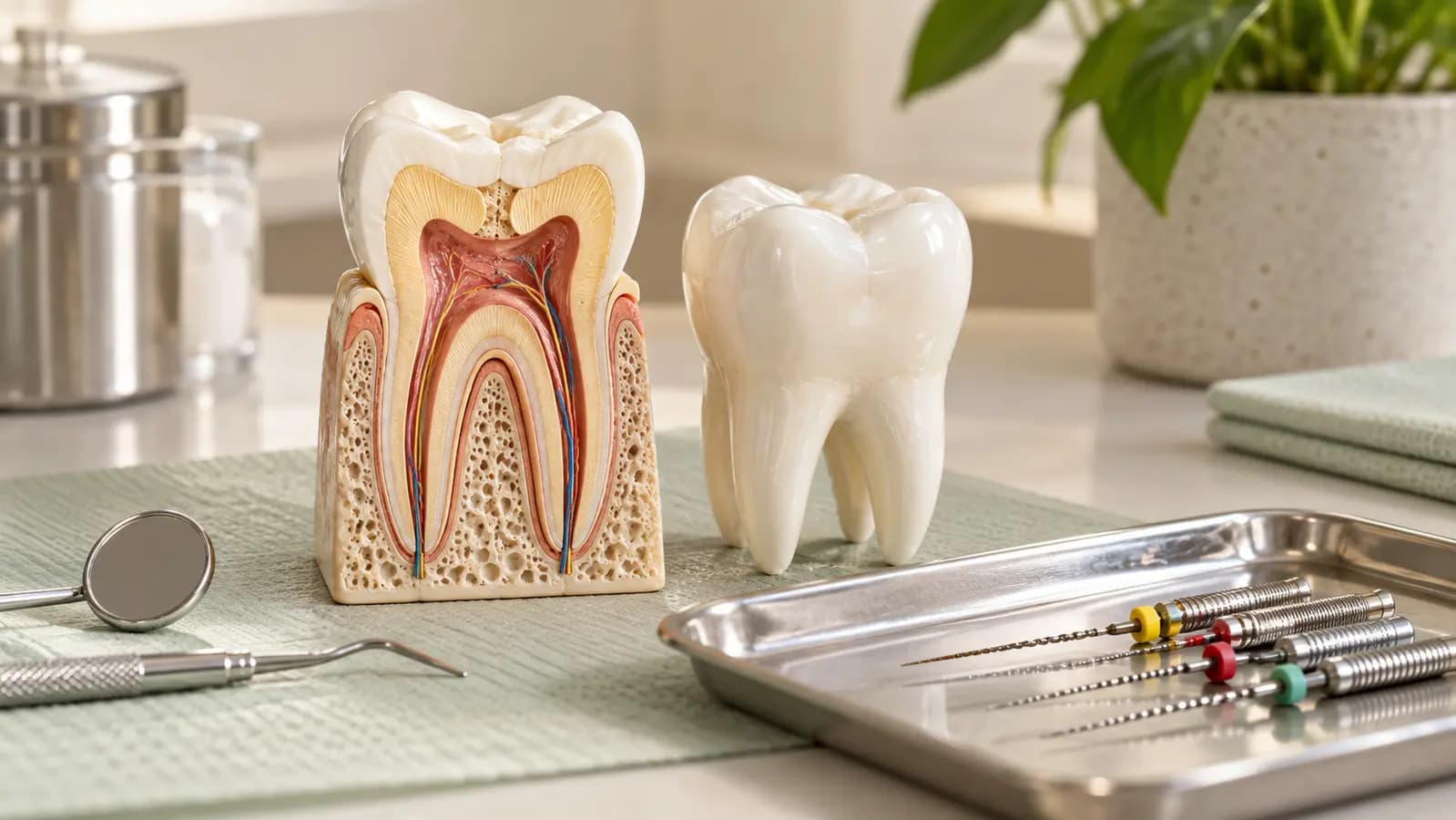
They generally include cleaning, shaping, disinfection, canal filling, and sealing and restoring the tooth.
How much does a root canal cost?
Floss guide fees are shown above. Complexity, additional investigations, and the final restoration affect the overall plan.