How to Plan a Dental Holiday in Bali from Australia
Plan a dental holiday from Australia to Bali with practical steps for choosing a clinic, timing treatment, budgeting, recovery, and aftercare.
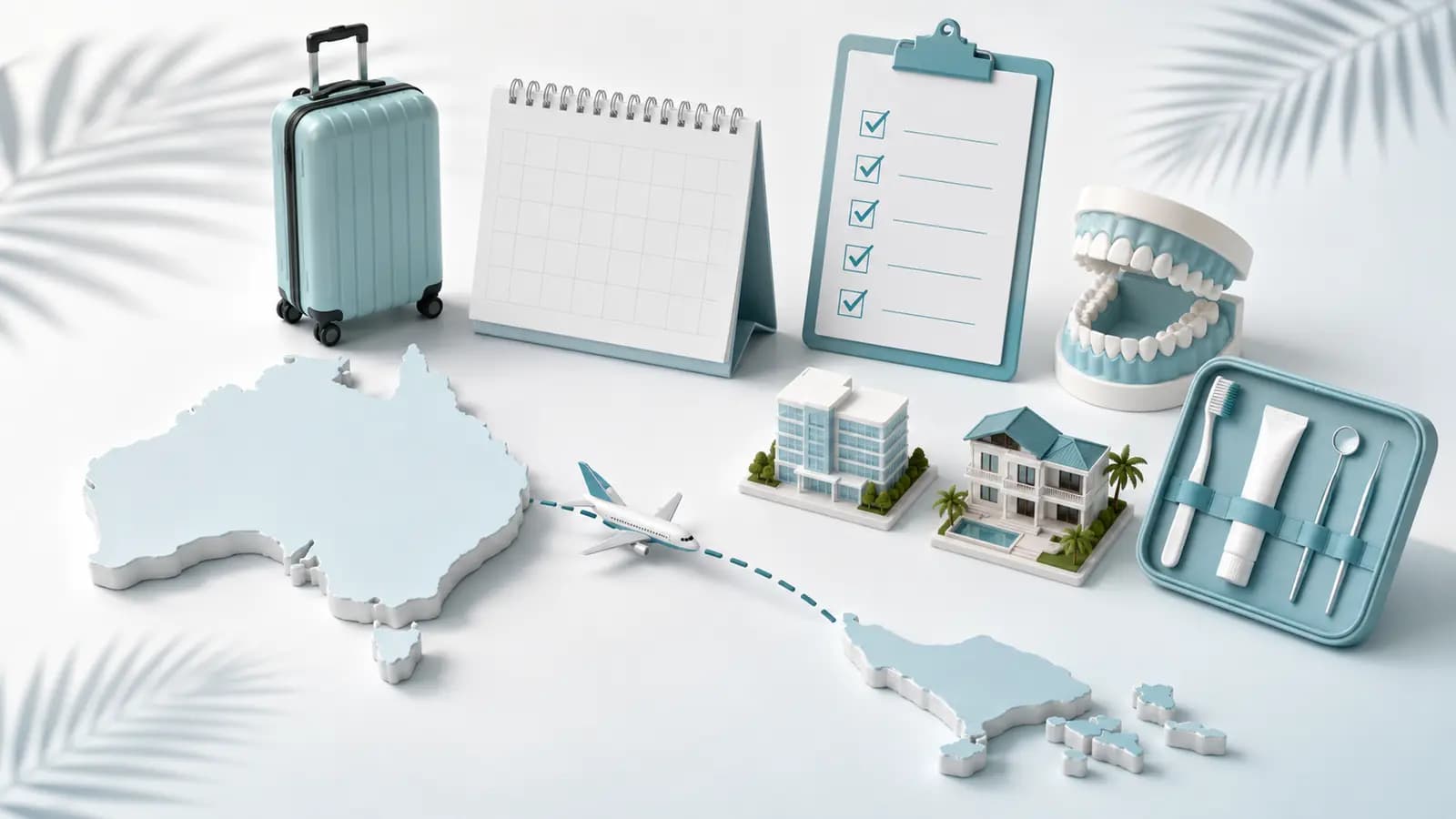
Planning a dental holiday from Australia to Bali is not about fitting as many procedures as possible into one trip. The more useful questions are which treatment can reasonably be completed in one visit, which care needs several stages, and how follow-up will work after you return home.
That is why the order should be treatment first, holiday second. Bali can still be part of the experience, but flights, accommodation, and sightseeing need to follow the clinical plan—not dictate it. An online consultation may provide direction, while the diagnosis, final fee, and decision to proceed remain subject to an in-person examination.
Is a Bali Dental Holiday Suitable for You?
Dental tourism in Bali is easier to plan when your general health is stable, you can keep buffer time available, and you are willing to arrange follow-up in Australia. It becomes harder when the trip is extremely short, a health condition is not well controlled, or complex treatment is expected to finish without any possibility of change.
Begin with the problem rather than a popular procedure. If you are still comparing options, our overview of dental treatments commonly sought by visitors to Bali explains the main categories. It does not mean that every option is appropriate for your teeth.
1. Get a Clinical Starting Point Before Booking Flights
When possible, see your dentist in Australia first. Discuss your main concern, request copies of recent X-rays, and collect relevant treatment notes. This gives a clinic in Bali a more useful starting point than a photograph of your smile alone.
For the online consultation, send well-lit photographs from several angles, recent imaging if available, a list of medicines and supplements, allergies, and important health conditions. Explain whether the tooth is painful, sensitive, mobile, or has been treated before. Better context leads to a more meaningful preliminary discussion.
Keep every remote recommendation provisional. Two-dimensional photographs cannot show the complete condition of roots, bone, gums, bite, or small cracks. If the plan changes after a chairside examination, that does not automatically mean the clinic has been inconsistent. It may mean the dentist is responding appropriately to new clinical findings.
2. Judge a Clinic by How It Makes Decisions
A modern-looking clinic is not automatically the right clinic for every procedure. You need to know who will examine you, who will perform the treatment, and how responsibility is shared if several dentists or an external laboratory are involved.
Before paying a deposit, ask these questions:
- Who is the treating dentist, and what relevant experience do they have?
- Which examination or imaging is required before the plan can be confirmed?
- What is the most conservative suitable option, and what are the alternatives?
- Which material or implant system is proposed, and can its details support care in Australia?
- Who handles concerns after hours or once you have returned home?
- What happens if the examination changes the treatment stages, timing, or fee?
A good answer does not need to promise certainty. Honest explanations include limitations and risk. Use our guide to the safety of dental work in Bali to understand what to verify without assuming that all clinics operate in the same way.
3. Separate Single-Trip Care from Multi-Stage Treatment
A common planning mistake is treating chair time as the entire treatment timeline. The procedure itself may be brief, while diagnosis, laboratory work, healing, fitting, and adjustment require additional time.
| Type of care | Travel implication | What to confirm |
|---|---|---|
| Examination, cleaning, or straightforward care | Often easier to accommodate within one trip | Whether another problem needs attention first |
| Veneers, crowns, or laboratory-made restorations | Requires production, fitting, and possible adjustment | Appointment count and when the final restoration will be ready |
| Root canal treatment, extraction, or surgery | Needs observation and recovery time | Review timing and signs of a complication |
| Implants or complex rehabilitation | May involve several phases and separate trips | Who manages each stage and how healing is assessed |
Do not select a more invasive option simply because it appears faster. A plan that preserves healthy tooth structure can offer more long-term value than a large makeover designed around a tight travel schedule.
4. Read the Quote as a Clinical Document
Two quotes with the same treatment name may include very different components. Ask for the teeth involved, material choices, anaesthesia, imaging, laboratory work, temporary restorations, medication, reviews, and possible additions if the examination reveals something unexpected.
Then calculate the complete trip cost. Include flights, accommodation, transport to the clinic, suitable meals while your mouth is tender, flight changes, extra nights, a support person when necessary, and follow-up in Australia. A procedure price may look substantially different, but the decision should be based on total cost and clinical value.
Check insurance in writing. Medicare does not cover treatment received outside Australia, and basic travel policies often exclude planned medical care and related complications. Ask specifically about aftercare, an extended stay, and medical evacuation. Do not assume that the word “medical” in a policy automatically covers dental tourism.
5. Build the Itinerary Around Clinical Milestones
A useful itinerary does not need every hour fixed. It needs an order that leaves room when your body or treatment does not follow the preliminary plan exactly.
- Arrive before the consultation. Give yourself time to rest after travelling.
- Complete the examination early in the stay. Confirm the diagnosis, options, fee, and informed consent.
- Schedule the main work early enough. The goal is not to rush, but to leave time for review.
- Keep post-treatment plans light. Avoid strenuous activity, heavy alcohol use, diving, or travel to remote areas during early recovery when advised.
- Protect time for fitting or review. A high bite, uncomfortable restoration, or healing concern is better assessed before departure.
- Leave a buffer before flying. Do not place the final review and airport departure too close together.
The appropriate time to fly varies with the procedure and your condition. Read about flying after dental treatment in Bali for context, then ask your treating dentist for individual guidance.
6. Plan Around Two Points of Care
A dental holiday does not end when you leave the Bali clinic. For major treatment, decide in advance who will review you in Australia. Your local dentist may need X-rays, treatment notes, material brands, implant system details, and the clinical reasoning behind what was done.
Ideally, the Bali clinic should provide clear documentation and a communication pathway if an Australian dentist needs more information. Follow-up responsibility should be discussed before treatment rather than after a concern develops.
When Should You Pause the Plan?
Slow down if you are asked to approve extensive treatment without an adequate examination, cannot identify the treating dentist, receive no alternatives, or are given a total price without detail. Other warning signs include an itinerary with no review appointment, guaranteed-sounding claims, and pressure to pay before your questions are answered.
Postponing does not mean the dental holiday has failed. Sometimes the safer decision is to manage infection first, divide treatment into phases, or return for the next stage after the tissues have healed.
Complete a Care Handover Before Flying Home
At the final review, request the written diagnosis, X-rays or scans, treatment notes, material brands, prescriptions, invoices, and aftercare instructions. Ask which symptoms are expected, which warning signs need prompt assessment, and who can be contacted from Australia.
Use this dental holiday checklist to organise records, regular medication, and travel details. A thoughtful plan is not the busiest one; it is the plan that leaves you with safe options when circumstances change.
Build the Plan Before You Fly
If you would like to discuss your dental condition and travel dates before booking, contact Floss Dental. The Floss team can help you begin a consultation, understand relevant dental care options, and organise an appointment with a dentist Bali realistically. Your diagnosis and final plan will still be confirmed after an in-person examination.
FAQ About Dental Holidays from Australia to Bali
Is it safe to get dental work in Bali?
Safety depends on your health, the procedure, the dentist’s qualifications, the clinic’s facilities, and the recovery time available. Verify who will treat you, disclose your medical history, and make sure risks and complication management are discussed before treatment.
Is it cheaper to get dental work done in Bali?
Some procedures may cost less than in Australia, but compare the complete trip, materials, reviews, and aftercare. A lower initial price may not be better value if treatment needs correction or the trip must be extended.
How much does dental treatment cost in Bali?
Fees depend on the diagnosis, number of teeth, complexity, materials, imaging, and appointment count. Request a written preliminary estimate after the online consultation, while understanding that the final amount can only be confirmed following an in-person examination.