Dental Implant Care in Bali: Cleaning and Follow-Up Appointments
Dental implants need daily cleaning and professional reviews even though the implant material does not develop cavities like a natural tooth. Plaque around the crown and gum can still cause inflammation. Implant maintenance in Bali should include cleaning methods matched to the restoration and a review schedule based on tissue health and individual risk.This guide […]
Dental implants need daily cleaning and professional reviews even though the implant material does not develop cavities like a natural tooth. Plaque around the crown and gum can still cause inflammation. Implant maintenance in Bali should include cleaning methods matched to the restoration and a review schedule based on tissue health and individual risk.
This guide focuses on implants already being used for chewing. If you have recently had surgery, follow your surgeon’s specific advice about the wound, brushing, eating, and medicines. A routine for a healed implant is not automatically appropriate immediately after placement.
Which areas need attention?
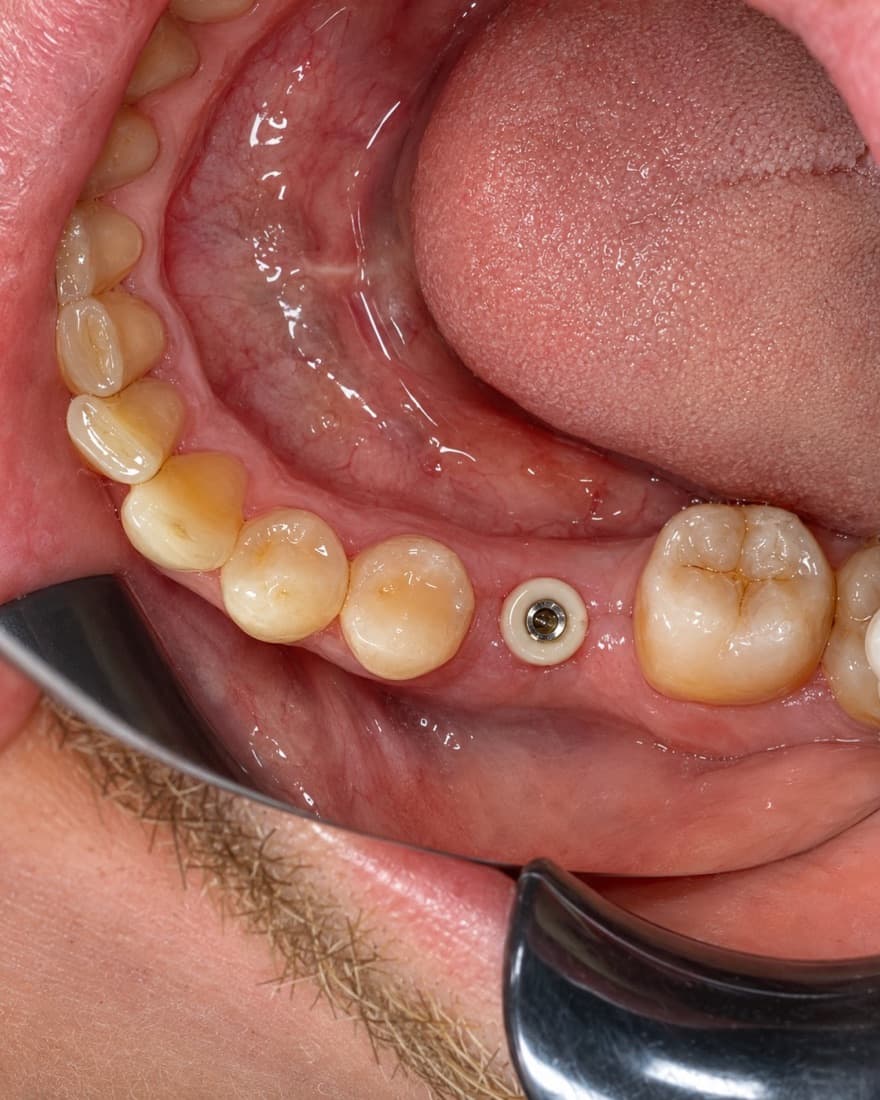
The visible replacement may be a single crown, a bridge, or an implant-supported removable denture. The crown, gum-level connections, and underside of a bridge create different cleaning spaces. One tool or technique will not suit every restoration.
Ask the dentist to show you the cleaning route around your own replacement teeth. Explain any area you cannot reach. Restoration design and your ability to keep it clean should be considered together; brushing harder is not a universal solution.
A daily implant-cleaning routine
- Brush twice daily with a soft toothbrush, gently cleaning the crown surfaces and the gum margin.
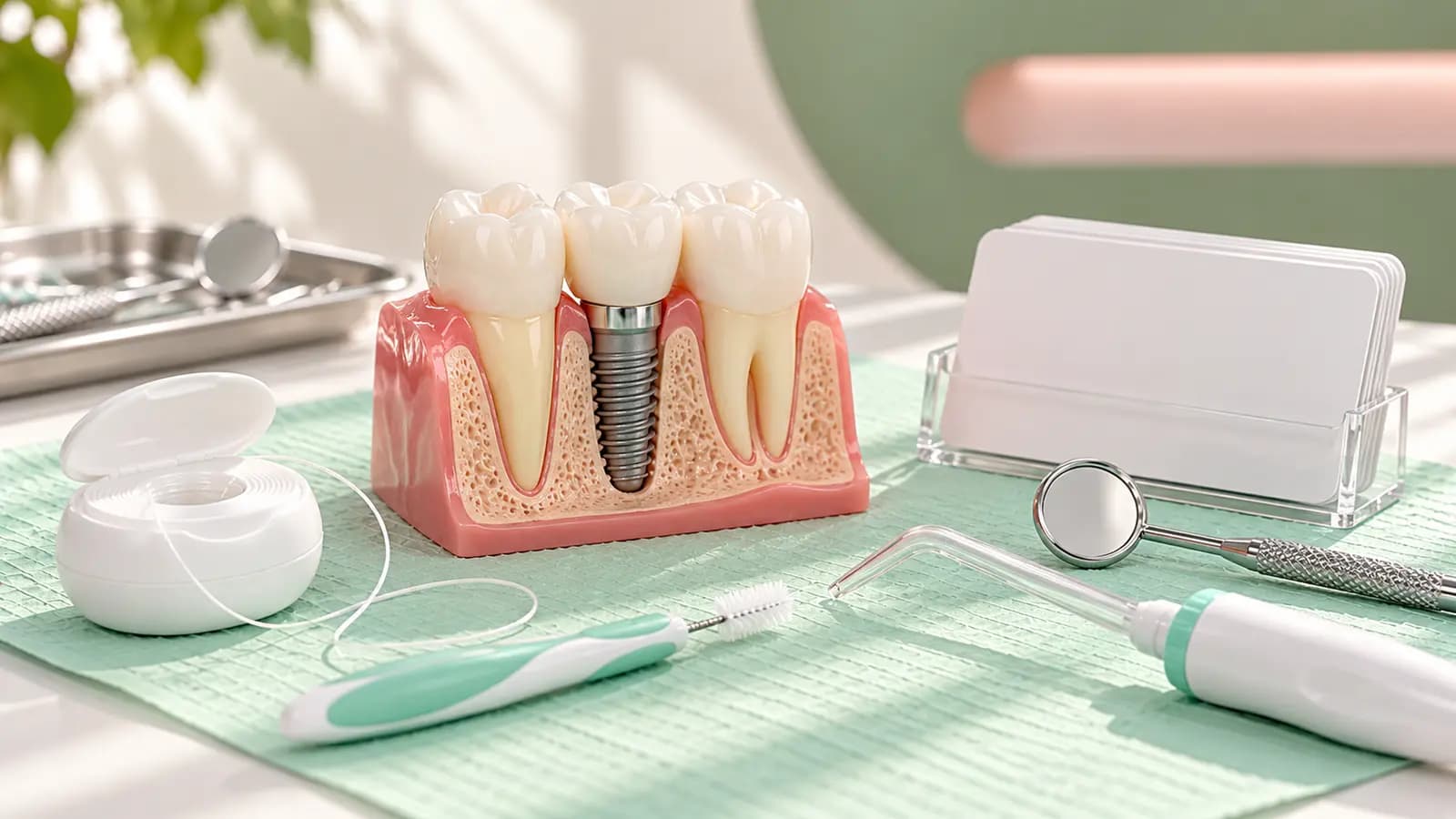
- Clean between teeth and beneath the restoration each day using tools selected with your dentist.
- Use fluoride toothpaste to help protect remaining natural teeth, following product advice from your dentist.
- Notice where food repeatedly collects, bleeding occurs, or access is difficult, and report those areas.
An electric toothbrush may help if it improves your technique. Access, pressure, and coverage matter more than the brand alone. Ask for a demonstration and practise during the visit so adjustments can be made.
Tools for spaces and beneath bridges
| Tool | Possible role | Important consideration |
|---|---|---|
| Interdental brush | Cleans spaces with sufficient access | Choose the right size; never force it through |
| Floss or a threading aid | Reaches selected areas beneath a restoration | Use a demonstrated technique that avoids tissue injury |
| Water flosser | An additional aid for difficult areas | Settings and role are individual; it does not replace all cleaning |
| Small-headed or single-tuft brush | Improves access at selected crown margins | Use gently in the areas demonstrated |
If floss repeatedly catches, frays, or is difficult to remove, stop and ask for a review of the technique and site. Avoid probing with metal objects or attempting to remove a crown yourself. Implant-supported removable dentures need different instructions from a fixed bridge.
How often should implants be reviewed?
The schedule depends on plaque control, previous gum disease, tissue findings, restoration design, smoking, and general health. Some patients need reviews every three to six months, while others require a different interval chosen for their risk.
A review is more than tartar removal. The dentist may assess bleeding, tissue condition, changes in measurements around the implant, restoration stability, and the bite. Imaging is used when needed to assess or compare supporting bone.
If placement was performed at another clinic or outside Bali, bring treatment records and implant-system details where available. Baseline information helps the clinician understand the restoration and monitor changes over time.
Changes that should not wait for the next routine visit
Redness, swelling, bleeding, pus, an unpleasant taste, or new pain should be checked. A loose-feeling crown or a change in the bite also needs assessment. A loose restoration does not necessarily mean the implant itself is moving in the bone; component problems require a separate evaluation.
Avoid chewing on a restoration that feels mobile and do not try to tighten it yourself. Contact the clinic. Spreading swelling, fever, or swallowing difficulty warrants more urgent help.
Habits that support maintenance
- Avoid smoking and discuss cessation support if needed.
- Continue diabetes management with your doctor and share relevant changes at dental reviews.
- Do not use teeth to open packaging or bite hard objects.
- Report grinding or clenching so the dentist can assess whether bite protection is appropriate.
- Keep maintenance appointments and request an earlier review if anything changes.
Mouthwash may be recommended for a particular purpose, but it does not replace mechanical cleaning. Long-term use of a rinse alone is not an adequate implant-maintenance routine.
A useful follow-up plan records the tools that fit your restoration, the next review date, and whom to contact if a component feels loose. This makes the daily routine and response to changes easier to follow.
Build a routine around your implant restoration
Bring your cleaning aids to the review so your technique can be checked. Plan dental care with a dentist Bali patients can consult at Floss Dental to assess hygiene, surrounding tissues, and an appropriate maintenance schedule.
FAQ About Dental Implant Care
How long does a dental implant take to heal?
Gum healing and integration with bone occur at different stages. Integration commonly takes several months, depending on the procedure and individual circumstances. Follow the clinician’s guidance before placing particular loads on the area.
Can implants develop complications?
Yes. Tissue inflammation, loss of supporting bone, and restoration-component problems can occur. Cleaning and reviews support earlier detection and management.
What should I avoid after implant placement?
Immediately after surgery, follow the instructions on food, activity, and wound cleaning. Over the long term, avoid smoking, neglected hygiene, and using teeth to bite hard objects.