A Crown After Root Canal Treatment in Kerobokan: Is It Always Needed?
Not every root canal-treated tooth requires a crown. The decision depends on tooth position, remaining structure, cracks, and biting forces. Back teeth often need cusp protection because they carry greater chewing loads. If you are considering a crown after root canal treatment in Kerobokan, the final restoration should be part of the overall plan.Floss lists […]
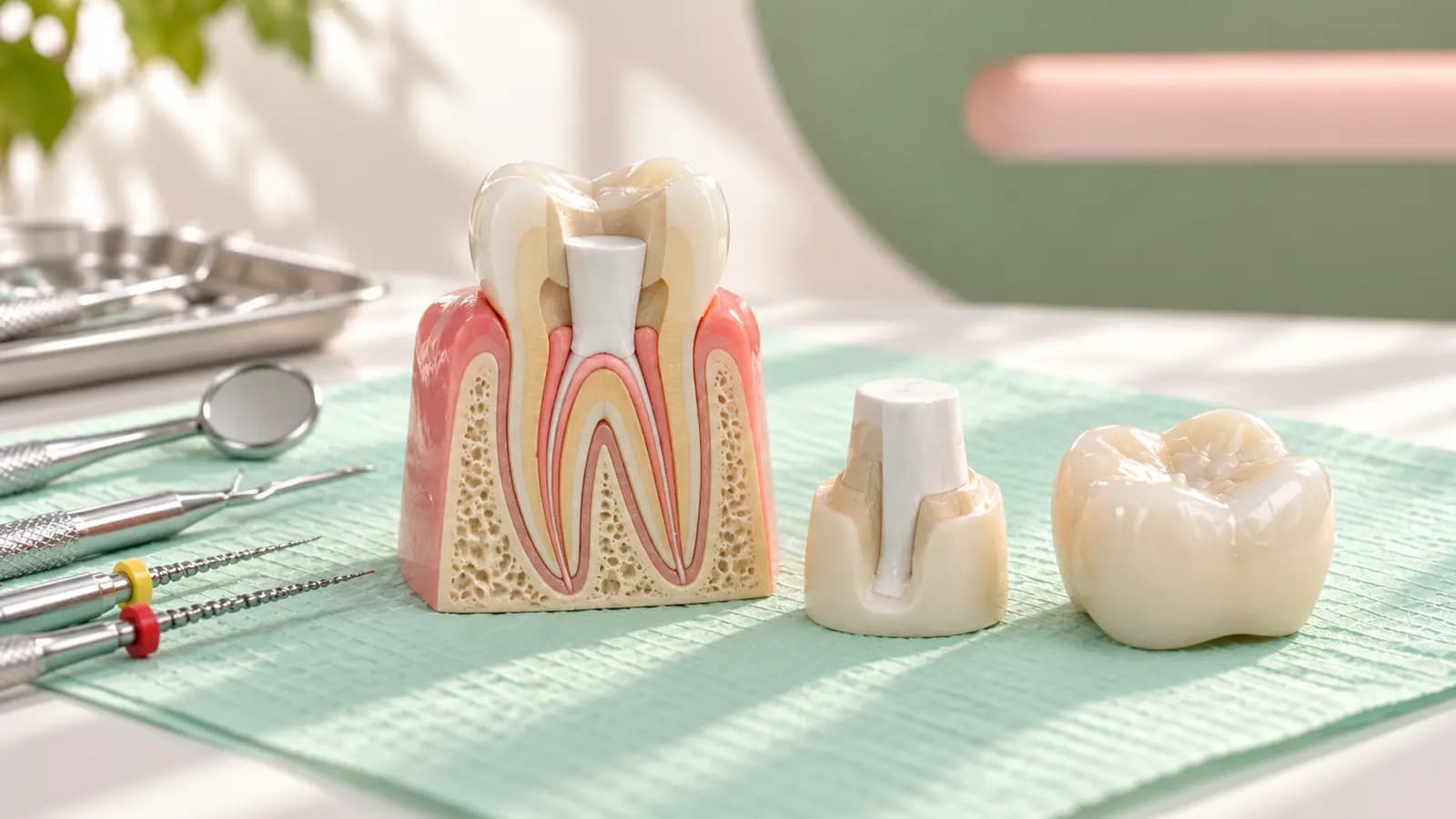
Not every root canal-treated tooth requires a crown. The decision depends on tooth position, remaining structure, cracks, and biting forces. Back teeth often need cusp protection because they carry greater chewing loads. If you are considering a crown after root canal treatment in Kerobokan, the final restoration should be part of the overall plan.
Floss lists E.max or zirconia ceramic crowns at Rp4,500,000 per tooth, with an estimated two to three visits. This is the crown service fee. Confirm whether root canal treatment, a core build-up, or additional procedures are included in your individual estimate.
Why a completed root canal still needs a restoration
Root canal treatment addresses diseased tissue inside the tooth and seals the canals. The upper part of the tooth then needs an appropriate restoration to close the access and protect the remaining structure.
A tooth needing endodontic treatment has often already lost tissue to decay, large fillings, cracks, or injury. Fracture risk relates particularly to remaining structure and the loads placed on it. Relief from pain does not mean a tooth with a temporary filling is ready for unrestricted chewing.
Factors that influence the crown decision
Tooth position and function
Molars and premolars receive substantial chewing forces. Cusp coverage is often needed after root canal treatment, especially when walls or cusps are weakened. A front tooth with adequate remaining structure may have different restorative options.
Remaining tissue and cracks
The dentist examines tooth walls, existing fillings, sound tissue, and possible cracks. A crown can protect a restorable tooth, but it cannot make every severely damaged root or fracture suitable for retention.
The bite and supporting tissues
Clenching or grinding, bite contacts, gum health, and supporting bone also influence the plan. Selecting a material alone is not enough without assessing these factors.
A filling, onlay, or crown?
| Restoration | Coverage | Main consideration |
|---|---|---|
| Direct filling | Rebuilds the damaged area | Suitable where remaining structure and protection needs allow |
| Onlay / partial cusp coverage | Covers selected chewing surfaces | An option in cases suited to the structure and bonding approach |
| Crown | Provides more extensive coverage of the visible tooth | Often considered for extensive damage or greater protection needs |
A single percentage of tooth loss does not determine treatment for every case. Ask why a particular coverage is recommended, which alternatives are reasonable, and which parts of the tooth need protection.
Will a post be needed?
A post may help retain the core when insufficient tooth structure remains to hold it. Its purpose is core retention rather than automatically strengthening the root. It is not necessary for every root canal-treated tooth.
If a post is recommended, ask how it relates to your remaining structure and proposed crown. Additional components should follow a clinical need rather than an obligatory package for all patients.
When should the final restoration be arranged?
Plan the restorative follow-up once endodontic treatment is complete, following the treating clinician’s advice. Unnecessary delay can leave the unrestored tooth vulnerable to fracture or problems with the seal.
The dentist considers symptoms, tissue condition, the seal, and any assessment needed before choosing the timing. There is no single day-count appropriate for everyone. Report worsening pain or swelling before moving on to the crown stage.
Care while you are waiting
- Avoid hard foods and heavy biting on the tooth until your clinician allows it.
- Continue gentle brushing and cleaning between teeth as instructed.
- Protect the temporary filling or crown and contact the clinic if it breaks or comes out.
- Report a high-feeling bite, severe or persistent pain, swelling, or the return of earlier symptoms.
Do not use household glue to reattach a crown. Keep any detached restoration if available and contact the clinic for advice. Waiting until pain develops can leave the tooth unprotected.
Understand the visits and estimate
Ask for a breakdown of root canal treatment, the core, any post, the temporary restoration, the final crown, and reviews. Clarify visit numbers and what could change the plan. Two to three crown visits are not necessarily the duration of the entire endodontic and restorative process.
After placement, hygiene still matters because natural tooth structure at the crown margin can develop decay. Reviews assess bite fit, margins, gum health, and symptoms in the treated tooth.
If different clinicians provide the root canal and restoration, make sure the handover is clear. Knowing who will arrange the next stage helps prevent a completed root canal being left with only a temporary restoration.
Complete treatment with suitable protection
Arrange a review of the remaining tooth structure and final restoration options. Discuss dental care with a dentist Bali patients can consult at Floss Dental to assess whether a crown, onlay, or filling fits your tooth after root canal treatment.
FAQ About Crowns After Root Canal Treatment
Is a dental crown permanent?
It is a long-term restoration, but may need repair or replacement. Hygiene, tooth condition, material, and bite forces affect ongoing maintenance.
Can a tooth with only the root remaining receive a crown?
Not always. The dentist assesses restorable structure, root condition, fractures, and supporting tissues. Some teeth need additional procedures; others are unsuitable for retention.
What problems can occur after a crown?
An uneven bite, discomfort, or gum irritation may need adjustment. A loose or fractured crown, pain, or swelling requires assessment.